

Things to Do in Turkey
Explore a majestic country of the subcontinent that delivers insights into the magical world of elegant mosques, historical buildings, and natural wonders.
— Things to Do in Turkey
Best Places to Visit in Turkey
With an ancient history spanning nearly 6,000 years, Turkey presents beautiful landscapes and a rich cultural heritage. With 52.6 million visitors in 2024, Turkey is welcoming visitors from all over the world. Turkey is a blend of Byzantine churches and Ottoman mosques, situated near the Mediterranean Sea, making it a perfect destination for travelers.
From the bustling bazaars of Istanbul to the rocky landscapes of Cappadocia, Turkey offers a wild and delightful experience for its visitors. Turkey is a unique country that spans both Europe and Asia. This mixture provides a perfect journey for travelers to Turkey, introducing them to ancient civilizations.
Have you ever imagined a country that owns both European and Asian cultures? You must visit Turkey, which offers a complete blend of European and Asian culture and traditions. This culture is reflected in their dress code, religious practices, culinary priorities, and architecture.
Turkey sits at a crossroads unlike any other country on earth. To the northwest, it borders Bulgaria and Greece. To the east, it shares borders with Georgia, Armenia, Iran, and Iraq. To the south, Syria and the warm waters of the Mediterranean. This unique geography means Turkey has absorbed influences from ancient Greece, Rome, Persia, Arabia, and Central Asia over thousands of years, and the result is a culture and landscape unlike anywhere else. When people ask what Turkey is known for, the honest answer is: almost everything.
The country spans from the dramatic Aegean coast in the west, where ancient ruins meet turquoise waters, through the high central plateau of Anatolia, past the fairy chimneys and cave churches of Cappadocia, all the way to the rugged mountains of eastern Anatolia near the Armenian border. Travelling through Turkey from west to east feels like moving through several different countries at once, each with its own cuisine, character, and visual identity. This guide covers the best places to visit in Turkey, the top things to do, the most important landmarks, and everything else you need to plan a brilliant trip.



— Things to Do in Turkey
Ottoman Splendor of Turkey
The beautiful landmarks of Turkey represent ancient architectural buildings and landscapes, rich in historical significance. They reflect the remnants of the Ottoman Empire. This cultural blend highlights their practices, traditions, cuisines, and architecture.
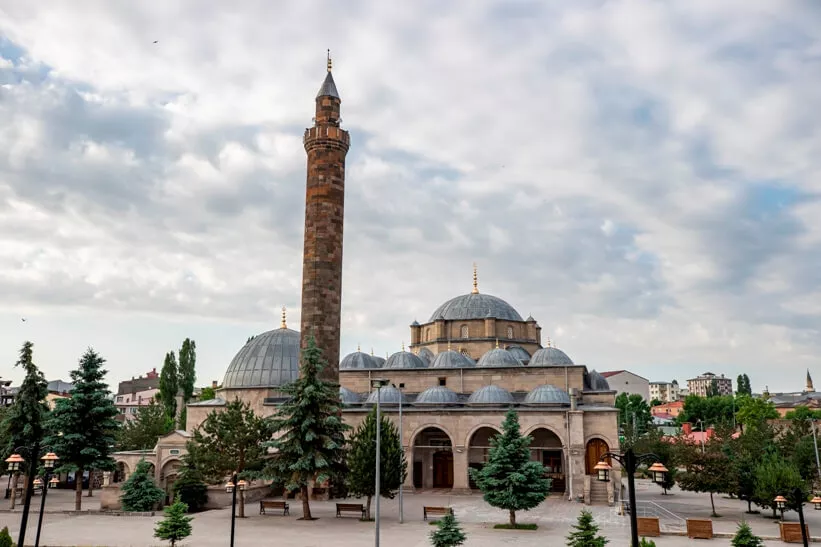
The Ottoman Empire ruled vast territories across three continents for over 600 years, from the early 14th century until the early 20th century, and its legacy is visible across Turkey in a way you simply cannot miss. Istanbul, formerly Constantinople, was the empire’s crown jewel and capital for centuries, and its skyline today is still dominated by the domes and minarets that the Ottomans built. But Ottoman architecture and culture extend far beyond Istanbul – from the mosques of Bursa and Edirne to the caravanserais scattered along ancient trading routes across Anatolia, the Ottoman period left a physical mark on nearly every corner of the country.
— Things to Do in Turkey
Hagia Sophia
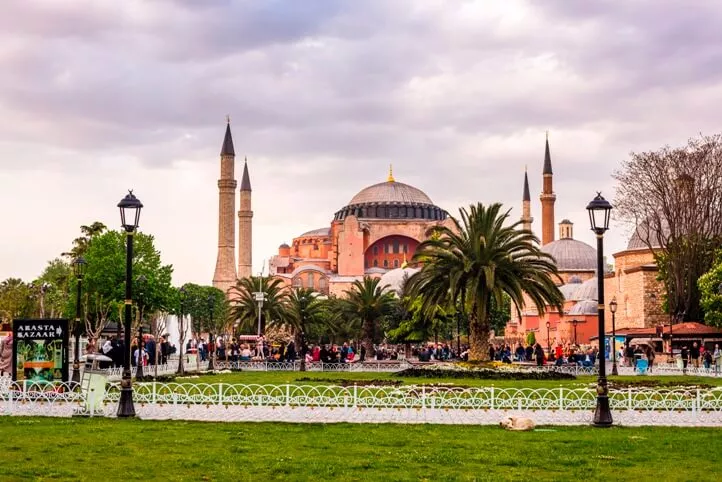
The Hagia Sophia is a crown jewel that serves as both a mosque and a museum, with an entry fee of $25. The Byzantine architecture of the 6th century is best showcased. It is a complete package of spiritual and architectural remnants. Many tourists from around the globe add Hagia Sophia to their list of things to do in do in Turkey.
The best time to visit the great Hagia Sophia is from 9 to 11 am to avoid crowds. Across Hagia Sophia stands the majestic Blue Mosque, with six minarets, intricate tiles, and Iznik ceramics, offering free entry to visitors to Turkey. The mosque entrance is restricted during the Friday prayer until 1:30.
The Hagia Sophia is arguably the most important building in Istanbul and one of the great architectural achievements in the history of the world. Built in 537 AD under the Byzantine Emperor Justinian, it served as a Christian cathedral for nearly 1,000 years before being converted into a mosque after the Ottoman conquest in 1453. It spent much of the 20th century as a secular museum before being reconverted to a mosque in 2020. Non-Muslim visitors are still welcome at most times of day outside of prayer hours, and the interior – with its enormous central dome, golden mosaics, and sense of immense scale – leaves virtually everyone who walks through the door speechless. Standing inside Hagia Sophia and looking up at the dome, it is genuinely hard to believe that human hands built this nearly 1,500 years ago.
Topkapi Palace Museum
The Topkapi Palace represents the imperial architecture of the subcontinent, ancient history, and a majestic museum. The entry fee to the Topkapi Palace is $75 for visitors and tourists traveling to Turkey. The treasury houses are famous for the Topkapi Dagger and the Spoonmaker’s Diamond, representing remnants of old times. This is also at the top of tourists’ choices whenThe searching for things to do in Turkey.
Topkapi Palace served as the administrative centre of the Ottoman Empire for nearly 400 years and is now one of the most visited museums in the world. The complex covers a huge area on the promontory above the Golden Horn and the Bosphorus, with multiple courtyards, pavilions, harem quarters, and treasury buildings. The views from the palace gardens over the meeting point of the Bosphorus, the Golden Horn, and the Sea of Marmara are among the finest in Istanbul. Allow at least half a day to do the palace justice, and book tickets in advance during the busy summer season.
Best places to visit in Turkey and Explore Ephesus near Izmir
This historical place in Turkey represents Turkey’s old culture, blending global experiences. The Library of Celsus and the Great Theatre will take you on a ride through the ancient Roman Empire. The entry fee is $40; they may charge an extra $15 for a terrace view showcasing urban civilization, with 2,000-year-old marble stones.
Ephesus is one of the best-preserved ancient cities anywhere in the Mediterranean world and one of the top things to do in Turkey for anyone with even a passing interest in history. At its peak, Ephesus was one of the largest cities in the Roman Empire with a population of around 200,000 people, and walking along its marble-paved streets today gives you a vivid sense of what urban life looked like 2,000 years ago. The site is located near the town of Selcuk, about an hour’s drive south of Izmir, making it an excellent day trip from either Izmir or Kusadasi. The nearby Ephesus Museum in Selcuk houses many of the finds from the excavations and is well worth a visit alongside the main site.
Pamukkale's exceptional terrace
This place in Turkey offers a natural spa with mineral-rich water featuring white calcium deposits. The entry fee is $30, which includes a view of the exceptional terrace and ancient Hierapolis. There is an additional $10 fee to visit Cleopatra’s Antique Pool.
Pamukkale – which means Cotton Castle in Turkish – is one of those places that looks almost too beautiful to be real. The pure white terraces of calcium carbonate cascade down the hillside like frozen waterfalls, and the thermal pools between them are genuinely warm and perfect for bathing. The site sits above the ruins of the ancient Roman spa city of Hierapolis, and the combination of natural wonder and ancient archaeology in one location is hard to beat. Pamukkale is located near Denizli in southwestern Turkey and is about three hours from Izmir by bus or car. It makes a popular stop on a longer route between the Aegean coast and Cappadocia.
Cappadocia's Underground Cities
These cities of Cappadocia include Derinkuyu, which takes you 8 steps deep into the ground, with an entry fee of $2. These settlements were places of refuge during times of conflict and have a strong ancient history. The Goreme Open Air Museum displays Byzantine cave churches.
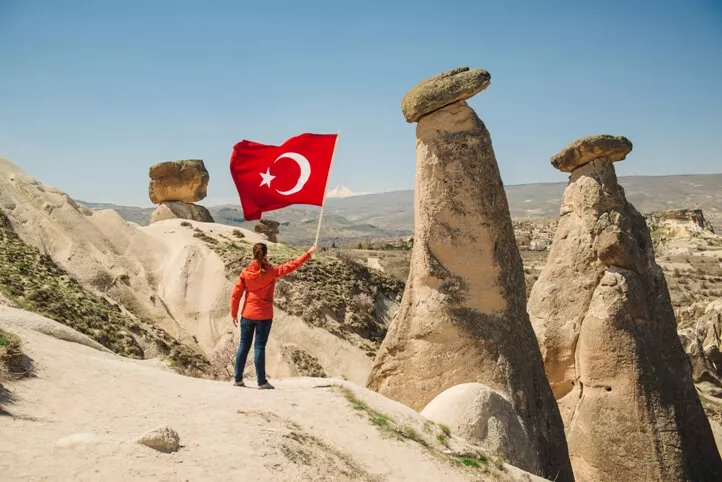
The underground cities of Cappadocia are genuinely extraordinary. Derinkuyu alone extends eight floors below the surface and could shelter up to 20,000 people, complete with stables, wine cellars, churches, and ventilation shafts. These cities were carved out of the soft volcanic rock – called tuff – thousands of years ago and used as places of refuge during times of invasion. Above ground, the landscape of Cappadocia is equally dramatic, with thousands of fairy chimneys – tall, mushroom-shaped rock formations – rising from the valleys. The Goreme Open Air Museum is a UNESCO World Heritage Site and contains rock-cut churches filled with remarkable Byzantine frescoes. This is one of the most unique and beautiful places in Turkey and one of the top tourist destinations in the country.
Gobekli Tepe
With a history of 6,000 years, Gobekli Tepe is the world’s oldest known temple. You will find the UNESCO World Heritage Center on your trip to Turkey, which charges an entry fee of $20. The intricate shapes and T-shaped pillars of the temple reveal the building’s ancient and religious aspects. Gobekli Tepe is also part of the list of things to do in Turkey.
Gobekli Tepe, located near Sanliurfa in southeastern Turkey, rewrote the history books when it was excavated from the 1990s onwards. The site dates back approximately 12,000 years – making it older than Stonehenge by around 7,000 years and predating the invention of agriculture – yet it features sophisticated carved stone pillars decorated with animal reliefs arranged in complex circular patterns. Nobody is entirely sure what it was used for, but the scale and sophistication of the construction suggest a level of social organisation that archaeologists previously thought impossible for that period. Visiting Gobekli Tepe is a genuinely humbling experience and gives you a sense of just how long humans have been creating meaningful places on this particular stretch of earth.
— Things to Do in Turkey
Most Important Landmark in Turkey
If you are looking for the single most important landmark in Turkey, the Hagia Sophia in Istanbul is the answer most historians, architects, and cultural scholars would agree on. Built in 537 AD, it is the oldest and most significant monument in a city filled with extraordinary buildings. Its influence on world architecture is immeasurable – the design of its great dome influenced mosque architecture throughout the Islamic world and cathedral design across Christian Europe. Every empire that controlled Istanbul – Byzantine, Latin, Ottoman, and modern Turkish – left its mark on this one building, making it a living record of nearly 1,500 years of history compressed into a single space.
But Turkey has multiple landmarks that could legitimately claim to be among the most important in the world. The Blue Mosque, built between 1609 and 1616 directly across from Hagia Sophia, is one of the most recognisable buildings on earth with its six minarets and cascading domes. The ancient city of Troy, near Canakkale on the Aegean coast, is where Homer’s Iliad is set and one of the most famous archaeological sites in the Western tradition. The ruins of Ephesus near Izmir are among the best-preserved ancient Roman city remains anywhere on earth. Gobekli Tepe near Sanliurfa, the world’s oldest known temple at around 12,000 years old, may be the most historically significant site of all in terms of what it tells us about human civilisation.
In Ankara, the capital of modern Turkey, the Ataturk Mausoleum – known as Anitkabir – is the most important modern landmark in the country and a deeply significant place for Turkish people. Mustafa Kemal Ataturk founded the Turkish Republic in 1923 and is revered as the father of the nation. His tomb draws millions of visitors each year and sits within a large complex surrounded by museums documenting the founding of modern Turkey. For visitors interested in Turkish history beyond the Ottoman period, it is an essential stop. Elsewhere across the country, Pierre Loti Hill in Istanbul, the ancient ruins of Hierapolis at Pamukkale, and the extraordinary Nemrut Dag in southeastern Turkey – where a king built giant stone statues of gods on a mountaintop 2,000 years ago – all deserve recognition as major landmarks in a country that has more than most.
— Things to Do in Turkey
Hot Air Balloons in Turkey - Cappadocia from the Sky
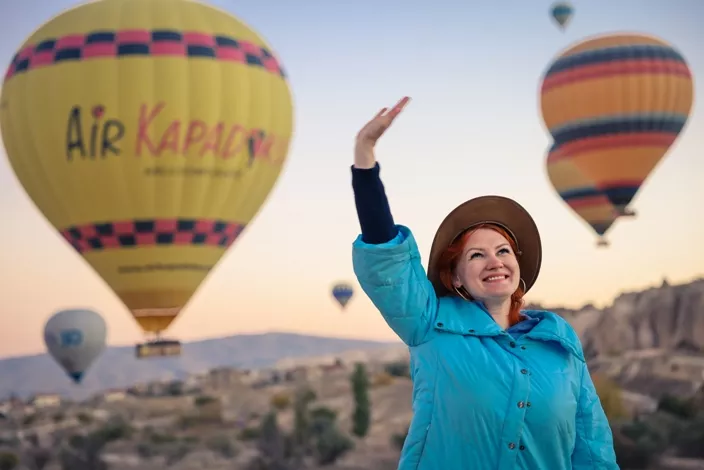
One of the most famous and photographed experiences in all of Turkey is a hot air balloon ride over the landscape of Cappadocia at sunrise. The region’s extraordinary terrain – thousands of fairy chimneys, cave valleys, rocky plateaus, and ancient volcanic rock formations – was always going to look incredible from the air, and the reality more than lives up to the photographs. Dozens of colourful balloons floating silently above the fairy chimneys of Goreme as the sun rises over the valleys is genuinely one of the most beautiful sights you can witness anywhere in the world.
Hot air balloon rides in Cappadocia typically launch at dawn, which is when the winds are calmest and the light is most spectacular. Flights last between 45 and 90 minutes and typically take you over the Rose Valley, Love Valley, and Goreme Valley at heights ranging from just above the rock formations to several hundred metres in the air. The hot air balloon price in Turkey varies depending on the operator and type of balloon. Standard shared balloon rides cost around $150 to $250 per person, while private balloon experiences cost significantly more. Prices typically include a champagne toast after landing, which has become a tradition of the experience.
The best time to visit Cappadocia for a hot air balloon ride is between April and October, when the weather is most reliable and flights operate most days. That said, hot air balloon rides take place year-round in Cappadocia, including in winter when snow on the fairy chimneys makes for a completely different and equally magical visual experience. Flights are cancelled when winds are too strong or weather conditions are dangerous, so if you are visiting for only one or two days and the hot air balloon is the main reason you are there, build in a buffer day in case of cancellation. Most operators will reschedule you automatically if a flight is grounded due to weather.
Beyond Cappadocia, hot air balloon rides are available in other parts of Turkey, including over the cotton-white terraces of Pamukkale and in some Aegean and Mediterranean coastal regions. However, Cappadocia remains by far the most famous and spectacular setting. The combination of the otherworldly landscape, the silence of floating in a balloon, and the quality of the light at sunrise makes a Cappadocia hot air balloon one of the great travel experiences not just in Turkey but on earth. If you visit only once, try to make it happen.
Sunrise horse riding through the valleys of Cappadocia is another way to experience the landscape at its most magical and is often combined with a multi-day Cappadocia itinerary. ATV tours through the valleys, hiking routes between the fairy chimneys, and cycling trails connecting the main villages all give you different perspectives on one of Turkey’s most unique and beautiful regions. The Goreme National Park and the Rock Sites of Cappadocia together form a UNESCO World Heritage Site, and spending three or four nights in the region rather than just one or two will give you time to explore it properly.
— Things to Do in Turkey
Experiences when you travel to Turkey
According to the geographical approach in Turkey, there are several spots and landscapes to explore and gain adventurous experiences. These experiences could be adventurous or just mood-lifting. All you need to do is visit the best places in Turkey to experience unforgettable moments. The good thing about Turkey is that when you prepare your checklist, you have several things to do in Turkey.
Turkey’s geography creates an extraordinary variety of experiences within a relatively compact area. In a single week, you can swim in turquoise Aegean water in the morning, hike through pine forests above a medieval castle in the afternoon, eat grilled fresh fish by the harbour in the evening, and wake up the next day to float over ancient rock formations in a hot air balloon. This variety is Turkey’s greatest strength as a destination and the main reason people keep coming back.
— Things to Do in Turkey
Hot Air Balloon Ride in Cappadocia
Hot air ballooning in Cappadocia serves as a unique and enjoyable experience, priced at $150-250 per person. A flight of 45-75 minutes is offered across various operators to make your visit to the best places in Turkey exceptional and memorable. You can see the whole landscape of Cappadocia from the air when you experience a hot air balloon flight.
Along the Turkish coast, the Mediterranean and Aegean shorelines provide beach experiences to tourists. Antalya’s Konyaalti Beach is worth mentioning, as it offers views of the blue sea. At the same time, Kaputas Beach features turquoise-blue water after a 187-step climb from the extensive parking area. Oludeniz’s Blue Lagoon offers pristine views along with paragliding facilities.
The landscape of Cappadocia rewards exploration beyond the balloon ride. Walking trails wind through Rose Valley, Pigeon Valley, and Love Valley between villages that have been built directly into the soft volcanic rock. The Ihlara Valley, a 16-kilometre gorge with a river running through it and ancient cave churches carved into its walls, is one of the most peaceful and beautiful walks in Turkey. Underground cities at Derinkuyu and Kaymakli can be visited on the same day, and the Goreme Open Air Museum with its beautifully preserved frescoed cave churches is just a short walk from the centre of Goreme village.
Gulet Cruises
Wooden boats and gourmet meals in Turkish cuisine offer sea travel along the Turkish coastline during your trip to Turkey. The price range for standard gulets is $150-350, while for luxury gulets, it is $300-500. Popular routes may include a journey from Fethiye to Bodrum within 7-8 days.
A gulet cruise along the Turkish coast – known as the Blue Voyage or Mavi Yolculuk – is one of the defining travel experiences in Turkey and has been drawing visitors to the country’s southwestern coastline for decades. The journey typically follows the route between Fethiye and Bodrum or vice versa, passing through a coastline of uninhabited coves, turquoise bays, ancient ruins rising directly from the water, and traditional fishing villages accessible only by boat. Days pass at a wonderful pace: swimming from the back of the boat, stopping in small coves for lunch, visiting archaeological sites like Kaunos and the Lycian rock tombs at Dalyan, and anchoring in busy harbours like Marmaris for evenings onshore. It is a completely relaxed and deeply pleasurable way to see a part of Turkey that is almost impossible to explore properly any other way.
The Lycian Way
If you visit the best places in Turkey, the Lycian Way offers a 546-kilometer hiking trail along the Mediterranean coastline. Looking for the perfect section? The route from Oludeniz to Kas and from Patara to Kalkan offers ancient Roman history, beautiful roads, and green forests along the way.
Ideal weather for hiking on The Lycian Way is in spring and autumn. These seasons serve as the perfect time to enjoy Turkey. Along the way, you can enjoy breathtaking landscapes as you make your way through Turkey’s hiking spots.
The Lycian Way is considered one of the great long-distance walking routes in the world and passes through the ancient kingdom of Lycia, whose cities left extraordinary rock-cut tombs carved directly into cliffsides above the sea. Walking sections of the route even for just a day or two gives you access to beaches, ruins, and villages completely off the standard tourist trail. Kas is a particularly lovely town along the route – small, stylish, and built on a hillside above a turquoise harbour – and makes an excellent base for several days of exploring the surrounding coast and countryside.
Bosphorus Ferry Rides
The iconic ferry rides in Turkey tend to connect Europe and Asia. The Bosphorus tour costs USD 4-20 and lasts almost 6 hours, offering views of the blue sea, high mountains, and flying birds as you travel through Turkey. There are also short ferry rides, including a one-hour route, and waterfront places. A Bosphorus ferry ride is also highly recommended as one of the things to do in Turkey.
Taking a ferry on the Bosphorus is one of the great pleasures of visiting Istanbul and one of the best free or cheap things you can do in the city. The short commuter ferry that runs between Eminonu on the European side and Kadikoy or Uskudar on the Asian side takes about 20 minutes each way and costs almost nothing, yet gives you some of the finest views of the Istanbul skyline available anywhere. The longer Bosphorus tour boats run from Eminonu up to the Black Sea entrance and back, passing under the famous bridges, past grand Ottoman waterfront mansions called yalis, and beside ancient fortresses that once controlled passage through this strategic strait.
— Things to Do in Turkey
Things to Do in Istanbul
Istanbul is the cultural and commercial heart of Turkey and one of the most dynamic, layered, and fascinating cities on earth. It is the only city in the world that sits on two continents – the historic peninsula with the Grand Bazaar, Hagia Sophia, and Topkapi Palace is technically in Europe, while Kadikoy, Uskudar, and the Asian districts across the Bosphorus are in Asia. This duality gives Istanbul an energy and a complexity that very few cities can match.
The things to do in Istanbul could fill months rather than days. The Sultanahmet area – the old historic peninsula – contains the highest concentration of world-class sights: Hagia Sophia, the Blue Mosque, Topkapi Palace, the Basilica Cistern (an enormous underground Roman water cistern supported by 336 columns), and the Byzantine Hippodrome. The Grand Bazaar, one of the largest covered markets in the world with over 4,000 shops, is a short walk away. The Spice Bazaar near the Golden Horn is more manageable in size but just as atmospheric, with its colourful mounds of spices, Turkish delight, and dried fruits.
Beyond Sultanahmet, Istanbul has numerous neighbourhoods worth exploring. Beyoglu and the Taksim area on the northern side of the Golden Horn is where you find the city’s galleries, restaurants, and nightlife concentrated around the famous Istiklal Street pedestrian avenue. Karakoy is a hip waterfront neighbourhood with excellent cafes and the Galata Tower, a medieval Genoese tower with a panoramic viewing platform. Balat and Fener are two historic Jewish and Greek neighbourhoods with colourful painted houses and a quieter atmosphere than the main tourist areas. The Asian side – Kadikoy especially – has a wonderful local market scene, excellent food, and a much more relaxed pace than the European historic core. Taking the ferry across just to wander the Kadikoy market and eat at one of the neighbourhood’s excellent lokanta restaurants is one of the best things to do in Istanbul for people who want to see the city as its residents live it.
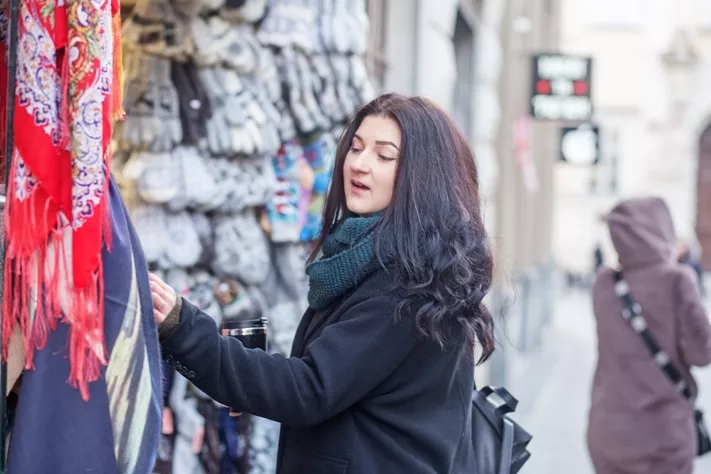
Free things to do in Istanbul are plentiful. The Blue Mosque has no entry fee. The Egyptian Spice Bazaar has free entry. Walking the Golden Horn waterfront, exploring the Princes Islands by ferry, wandering through the weekly market at Fatih, or simply sitting in a tea house watching the city go by cost very little. The Istanbul Museum Pass gives access to many of the paid attractions including Topkapi Palace, Hagia Sophia Museum, the Basilica Cistern, and the Chora Church at a combined price significantly cheaper than buying individual tickets.
— Things to Do in Turkey
Things to Do in Antalya and the Turkish Riviera
Antalya is the gateway to Turkey’s Mediterranean coast and one of the most popular tourist destinations in the country. The city itself has a beautiful historic old town called Kaleici, with Roman harbour walls, a 2nd-century Roman arch, winding narrow streets, and excellent restaurants and bars set in restored Ottoman-era houses. Above the old town, the broad Ataturk Boulevard follows the clifftop with views along the coast, and the cliffs drop directly to the sea below. Antalya is also the starting point for exploring a remarkable stretch of Turkish coastline that includes some of the best beaches in Turkey.
Antalya’s best beach areas include Konyaalti to the west, a long pebble beach backed by the Bey Mountains, and Lara Beach to the east, a long sandy beach lined with large resort hotels. But the beaches that get the most attention are further along the coast. Kaputas Beach, accessed by 187 steps from the roadside, is a tiny cove of extraordinary turquoise water hemmed in by vertical cliffs. Oludeniz is one of the most photographed beaches in Turkey, with a protected Blue Lagoon alongside an open beach backed by green mountains and a constant procession of paragliders launching from Babadag Mountain above. Patara Beach, near Kas, is a 12-kilometre stretch of unspoilt sand that is also a protected nesting ground for loggerhead turtles.
Things to do in Antalya extend well beyond the beaches. The ancient ruins in this part of Turkey are extraordinary. Side, about 75 kilometres east of Antalya, is a remarkable ancient Roman city where temple columns rise dramatically above the modern beach town. Aspendos, inland from Side, has the best-preserved Roman theatre in the world, still used for opera performances today. Perge and Termessos are two more impressive ancient sites within easy day-trip distance of Antalya. Alanya, further east along the coast, is dominated by a dramatic Seljuk castle on a clifftop promontory above the sea and makes a lively base for several days.
Things to Do in Bodrum
Bodrum sits on a peninsula in the Aegean region of Turkey, facing the Greek island of Kos across a narrow strait. The town wraps around a beautiful harbour dominated by the Crusader-built Castle of St Peter, which houses the extraordinary Museum of Underwater Archaeology – one of the finest museums of its kind in the world. Bodrum has a sophisticated and cosmopolitan character, popular with Turkish celebrities and international visitors alike, with excellent restaurants, buzzing nightlife, and some of the most beautiful sailing waters in Turkey.
Things to do in Bodrum include exploring the castle and its museum, taking day trips to the surrounding peninsula by boat, visiting the village of Gumusluk with its submerged ancient ruins you can swim above, and day-tripping to the nearby Aegean islands. The Bodrum peninsula itself has numerous smaller bays and villages worth exploring – Yalikavak has a famous marina and excellent fish restaurants, Turkbuku is known as the Turkish St Tropez, and Gumusluk is quieter and more authentic. Bodrum is also one of the best places in Turkey to arrange a gulet cruise along the coast.
Things to Do in Cappadocia
Cappadocia in central Anatolia is unlike anywhere else on earth. Millions of years of volcanic eruptions covered the region in soft tuff rock, which water and wind then eroded into the surreal landscape of fairy chimneys, rock cones, and deep valleys that you see today. Early Christians carved cave churches, monasteries, and entire underground cities into this rock, and the cave dwellings that came later have been converted into some of the most atmospheric hotels in the world.
Beyond the famous hot air balloon rides, the things to do in Cappadocia are many. The Goreme Open Air Museum displays a remarkable collection of rock-cut Byzantine churches from the 9th to 11th centuries, with frescoes that remain vivid despite a thousand years. Walking through the Rose Valley or the Ihlara Gorge takes you past cave dwellings and carved churches in complete peace. Underground cities at Derinkuyu and Kaymakli are fascinating to explore. The Avanos pottery tradition, based on red clay from the Kizilirmak River, is an important part of regional culture and workshops welcome visitors. The town of Urgup has excellent restaurants and wine bars, and the Cappadocia region produces its own distinctive wines from grapes grown in the volcanic soil.
The best time to visit Cappadocia for hot air balloons is from April to October, though the winter landscape is also spectacular. A three-day itinerary allows you to cover the main sites comfortably: day one for Goreme Open Air Museum and a valley walk, day two for the hot air balloon at sunrise followed by an underground city, and day three for a longer excursion to Ihlara Valley or the Soganli Valley. Mustafapasa, a village of beautiful old Greek stone houses, is a quieter and more authentically residential alternative to staying in Goreme itself.
— Things to Do in Turkey
Other Key Cities and Destinations in Turkey
Izmir is Turkey’s third-largest city and one of its most likeable. Sitting on a sweeping bay on the Aegean coast, Izmir is more liberal and cosmopolitan in character than many other Turkish cities, with a long seafront promenade, excellent restaurants and cafes in the Alsancak neighbourhood, a lively covered bazaar, and a relaxed, welcoming atmosphere. The city acts as an excellent base for day trips to Ephesus, Pergamon, the ancient city of Sardis, and the Cesme peninsula, which has some of the clearest water and most beautiful beaches on the Aegean coast.
Ankara, Turkey’s capital, surprises many visitors who arrive expecting a bureaucratic city and find instead a modern, well-organized place with excellent museums. The Museum of Anatolian Civilizations is one of the finest archaeological museums in the world, covering the entire sweep of Anatolian history from the Palaeolithic through to the Byzantine period. The Ataturk Mausoleum is a must-visit for understanding modern Turkish identity. Ankara also has a pleasant old castle district on the hill above the city centre with traditional houses, craft workshops, and views over the sprawling modern capital.
Fethiye on the southwestern coast is a great base for exploring the Turquoise Coast. The town sits on a large bay and has a pleasant waterfront, a lively market, and the famous Lycian rock tombs carved into the cliffsides above the town. Nearby Oludeniz, the Blue Lagoon, and the paragliding mountain of Babadag are all easy to reach from Fethiye. The ghost town of Kayakoy – an abandoned Greek village whose inhabitants were displaced during the 1923 population exchange – is one of the most moving and atmospheric places in this part of Turkey.
Trabzon on the Black Sea coast is a completely different Turkey – green, forested, rainy, and culturally distinct from the Aegean and Mediterranean south. The Sumela Monastery, carved into a sheer cliff face deep in a forest gorge and dating back to the 4th century, is one of the most extraordinary buildings in Turkey. The Uzungol lake and valley inland from Trabzon is a beautiful green landscape very popular with Turkish visitors. Mardin in southeastern Turkey is a city of extraordinary honey-coloured stone buildings perched on a hilltop above the Mesopotamian plain, and its old town is one of the most beautiful in the entire Middle East.
— Things to Do in Turkey
Cultural Insights of Turkey
Urbanization in Turkey is connecting with ancient cultural remnants to achieve a majestic outcome on a global scale. The Grand Bazaar in Istanbul is included in one of the largest shopping centres in the world. Around 4,000 shops are selling a wide range of items.
Bargaining percentage increases from 55-60%. It could be a plus point if you know how to bargain when traveling to Turkey. You will find a perfect cooperative environment, with locals who welcome international visitors warmly.
Turkish hospitality is genuinely warm and is one of the things visitors consistently mention after returning from a trip to Turkey. Being invited for tea by a shopkeeper, offered complimentary fruit at a restaurant, or helped by a stranger who noticed you looking at a map is a normal part of daily life here. This friendliness is not just commercial – it reflects a genuine cultural tradition of looking after guests. The Turkish word misafirperver, meaning guest-loving, describes an attitude that runs deep in the culture.
Turkish Hammam
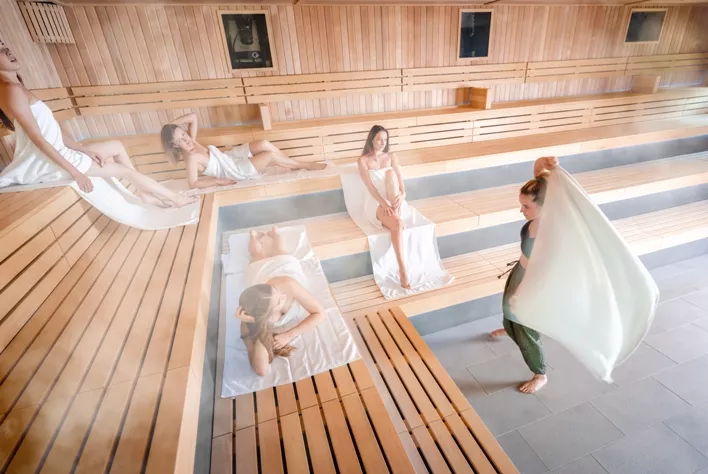
The tradition of hammams takes you back to the Ottoman times. Cagaloglu Hamami, established in 1741, offers a hamam ranging from $40 to $300, with steam, marble scrubs, and bubble baths. Ayasofya Hurrem Sultan Hamami serves a luxurious bath for $300, located near the majestic Hagia Sophia and the Blue Mosque.
A traditional Turkish bath is one of the great cultural experiences in Turkey and something that every visitor should try at least once. The classic sequence – steam room, scrub with a kese (exfoliating mitt) by a masseur, soap bubble massage, and cooling off with cold water – leaves you feeling remarkably clean and completely relaxed. Beyond the famous Istanbul hamams, almost every town and city in Turkey has its own public bath, often charging a fraction of the touristy Istanbul prices. Asking locally for the best neighbourhood hamam is a great way to have a more authentic experience.
— Things to Do in Turkey
Turkish Traditions
Urbanization in Turkey is connecting with ancient cultural remnants to achieve a majestic outcome on a global scale. The Grand Bazaar in Istanbul is included in one of the largest shopping centres in the world. Around 4,000 shops are selling a wide range of items.
Bargaining percentage increases from 55-60%. It could be a plus point if you know how to bargain when traveling to Turkey. You will find a perfect cooperative environment, with locals who welcome international visitors warmly.
Turkish Culinary Secrets
Guided experiences during a visit to the best places in Turkey culminate in the ‘Taste of Two Continents’ in Istanbul. The taste includes a complete blend of Europe and Asia. There are some iconic foods of Turkey, such as Doner kebab, Turkish dumplings (Manti), and baklava, which explain the cultural aspects of Turkey.
Turkish cuisine is one of the great food cultures of the world and is regarded alongside French and Chinese cooking as one of the three finest cuisines globally. It draws on the agricultural wealth of Anatolia – one of the most fertile regions on earth – combined with centuries of Ottoman palace cooking and the influences of Arab, Persian, Greek, Armenian, and Central Asian culinary traditions. The result is a cuisine of extraordinary range and quality, from the simple perfection of fresh bread with olive oil and cheese for breakfast to the complex layered flavours of a slow-cooked lamb stew served over rice with flatbread.
— Things to Do in Turkey
Traditional Turkish Cuisine
In Turkey, traditional cuisine serves street food as well as fine dining. The price range for traditional street foods is $4-8, while for fine dining, the conventional rates are $30-50. The must-try dishes of traditional Turkish cuisine are iskender kebab, borek, and lahmacun.
Tea culture is common in many countries and serves as a tradition and source of identity for many regions worldwide. In Turkey, tulip-shaped glasses are used to serve tea. Karakoy Gulluoglu, a historic baklava shop, typically displays the Ottoman palace’s historic traditions.
Breakfast in Turkey is a full and ceremonial affair, especially outside the cities. A traditional Turkish breakfast – kahvalti – spreads across the table with dozens of small dishes: tomatoes, cucumbers, olives, white cheese, honey, clotted cream, several types of egg preparation, pastries, and always tea served in tulip-shaped glasses. In Istanbul, the area around Besiktas and the neighbourhood of Kuzguncuk on the Asian side have excellent breakfast spots. In the regions, village breakfasts are often even more generous. If you want to understand Turkish food culture, start with breakfast.
Turkish Spiritual Heritage
The iconic and most renowned whirling dance is a Sufi tradition. This specific dance serves as a link between traditions and the spiritualism of the Turkish people. If you are looking for an authentic ceremony, EMAV Sema in Fatih offers a delightful ceremony for $35 per person.
HodjaPasha Cultural Center offers a visitor-friendly venue for all visitors to Turkey at a price range of $30-40. UNESCO Heritage recognizes it as a spiritual practice. The practice is to spend hours following the rules, like modest dress and complete silence.
Konya, in central Turkey, is the city most associated with the Sufi mystic and poet Rumi – known to Turks as Mevlana – who lived and died here in the 13th century. The Mevlana Museum, housed in the green-domed mausoleum and former lodge of the Mevlevi order, is one of the most visited places in Turkey outside Istanbul. The whirling dervish ceremony – the Sema – takes place in Konya regularly and watching it in this city where the tradition was born is a genuinely moving experience. Konya is also a deeply religious and conservative city by Turkish standards, with excellent traditional food and a different atmosphere from the coastal resorts.
Traditional Accommodations
There are several places you can find that are accommodating when you visit the best places in Turkey to explore the hidden gems of the world. Cappadocia’s Rock-Cut caves and Ottoman mansion conversions offer nightly rates of $40-60. Luxury hotels like Museum Hotel charge $447+ per night.
These hotels and mansions are ready to provide a peaceful, comfortable environment. Not only that, but all the basic and luxury amenities in the form of spa facilities, dining with Turkish cuisine, and sights of the natural beauty of Turkey. Let’s book tickets to Turkey and enjoy this fantastic destination.
Turkey’s accommodation options span an enormous range. Cave hotels in Cappadocia are among the most atmospheric places to stay anywhere in the world, with rooms carved directly into the volcanic rock, terrace views over the valleys, and breakfasts served on rooftops as the hot air balloons drift overhead. Historic mansions converted into boutique hotels are found in Istanbul’s Sultanahmet and Beyoglu districts. Along the coast, small family-run pensions in villages like Kas, Oludeniz, and Akyaka offer genuine Turkish hospitality at very reasonable prices. And at the top end, Turkey has excellent luxury resorts along the Bodrum peninsula and the Riviera coast that rival anything in the Mediterranean.
Historical Hotel Istanbul
There are several places you can find that are accommodating when you Best places to visit in Turkey to explore the hidden gem of the world. Cappadocia’s Rock-Cut caves and Ottoman mansion conversions offer nightly rates of $40-60. Luxury hotels like Museum Hotel charge $447+ per night.
These hotels and mansions are ready to provide a peaceful, comfortable environment. Not only that, but all the basic and luxury amenities in the form of spa facilities, dining with Turkish cuisine, and sights of the natural beauty of Turkey. Let’s book tickets to Turkey and enjoy this fantastic destination.
— Things to Do in Turkey
Days in Turkey
Once you visit the best places in Turkey, various factors will affect your tour. Aspects could be positive or negative. It is always better to get some extra information about the place or destination you are going to visit before you head there.
International Travelers
Turkey offers extraordinary exchange rates for international travellers, such as 1 Lira at 38.93 in 2025. Most Europeans and North Americans enjoy visa-free entry to Turkey. A visa may be required for up to 150 days for citizens of certain countries.
Turkey is significantly increasing cautionary measures regarding information. So, tourists and visitors can visit the country without threats and security issues, making tourism in Turkey safe and sound. You will admire the charms of the country when you come to see them.
Turkey requires an e-Visa for many nationalities including US, UK, and Australian citizens. This is a simple online application that should be completed before travel and costs around $50 depending on nationality. The process takes only a few minutes and the e-Visa is emailed to you, usually within a few hours. Citizens of some EU countries do not need a visa at all for short stays. Always check the current requirements on the official Turkish government website before booking, as these can change.
— Things to Do in Turkey
Public Transport Turkey
There are several domestic flights within Turkey, charging $10-65 USD. High-speed trains move between Ankara and Istanbul in 4 to 4.5 hours, charging a fee of $10-20 USD. Bus service offers budget-friendly rides for $13 to $15, and you can use public transportation with an Istanbul travel card.
Turkey has one of the most comprehensive and affordable long-distance bus networks in the world. Major intercity bus companies operate comfortable, air-conditioned coaches between almost every town and city in the country, running overnight as well as during the day. Tickets are cheap and bought either online or at the bus station. For longer distances – Istanbul to Cappadocia is around 10 hours by bus – domestic flights on Turkish airlines are often worth the extra cost in time saved, especially with competitive prices available if booked in advance. Istanbul itself has an excellent Metro system, tram network, and ferry service that together make getting around the city without a car both easy and enjoyable.
Hotels in Turkey
Budget-friendly accommodations are available at $20-50 USD. Mid-range accommodations may cost $60-120 USD, while Shangri-La Bosphorus and Cappadocia’s Museum Hotel offer all the amenities for $150-400+. Ready to book your tickets to travel to Turkey?
Ready to book your tickets to travel to Turkey with the help of Booking.com?
Perfect Time to Visit Turkey
If you are planning to visit Turkey, it is essential to know the best time to visit. April to June and September to October are the best times to enjoy your trip, with good weather. The winter season, from December to February, brings extreme snowfall and cold weather when traveling to Turkey.
Spring (April to June) is widely considered the best time to visit Turkey. Temperatures are warm but not oppressive, wildflowers cover the hillsides, and the ancient sites and beaches are not yet overwhelmed with summer visitors. Istanbul in April and May is particularly pleasant. Summer (July and August) is hot – very hot on the coast and in the interior – and very busy, especially in Cappadocia, Istanbul, and the beach resorts. Prices are at their peak and popular sites require advance booking. Autumn (September and October) brings slightly cooler temperatures, thinner crowds, and the beautiful golden light that photography lovers prize. Winter is cold in most of Turkey but very manageable in Istanbul, which has a mild maritime climate, and snow in Cappadocia creates a magical landscape worth visiting specifically for.
Best Turkish Cuisine
Turkey offers some of the best cuisine, with street food priced $4-8 and fine dining $20-50. Local restaurants provide meals priced from $8 to $15. There are several traditional Turkish breakfast spots to enjoy the best dining while you’re in Turkey.
The sheer quality and variety of food available in Turkey at every price point is one of the most pleasant surprises for first-time visitors. A proper sit-down meal at a neighbourhood lokanta – a traditional Turkish cafeteria restaurant – costs very little and is usually excellent. Meze plates of hummus, baba ganoush, stuffed vine leaves, white cheese with melon, and fried courgette with yoghurt make a perfect shared meal before a main of grilled meat or fish. Street food in Turkey – simit (sesame bread rings), lahmacun (thin flatbread with minced meat), borek (flaky pastry with cheese or spinach), and corn on the cob – is cheap, good, and available everywhere.
Sign up to our newsletter and grab tickets at lowest prices
FAQ: Things to Do in Turkey
If you are a first-time visitor to Turkey, you should visit Istanbul for its rich cultural heritage and traditional experiences. You can visit Cappadocia for a hot-air balloon ride at a low price. You can also enjoy going to Antalya or Bodrum to experience the Mediterranean coastline.
A classic first-time Turkey itinerary combines three or four days in Istanbul, two or three days in Cappadocia, and then a few days on the coast at Antalya, Fethiye, or Bodrum depending on the time of year. Two weeks allows you to do all three properly. One week is enough for Istanbul and Cappadocia if you are pressed for time. Ephesus near Izmir and Pamukkale are both worth adding if your schedule allows.
Turkey welcomes almost 52 million visitors annually. This might be proof for new tourists and visitors that Turkey is an entirely safe place to visit. You will not regret your visit to the destination.
For the vast majority of visitors, Turkey is a very safe and welcoming country. The main tourist areas - Istanbul, Cappadocia, Antalya, Bodrum, and the Aegean coast - are all generally safe and well-policed. Standard travel precautions apply as in any destination: watch your belongings in crowded areas, use licensed taxis or apps rather than unofficial drivers, and keep copies of important documents separate from the originals. Always check your government's current travel advisories before visiting, as the situation in border regions near Syria and Iraq can be different from the tourist-focused areas of western and central Turkey.
If you are traveling to Turkey, you can use the Turkish Lira (TRY) as the currency. There are affordable exchange rates in the country for tourists and visitors. You will easily get Turkish Lira upon arrival in the country through conversion.
Turkish Lira is the currency used throughout Turkey. Exchange rates have been favourable for visitors with strong currencies in recent years, making Turkey genuinely good value for European and American tourists. ATMs are widely available in all cities and most towns. Credit cards are accepted in hotels, restaurants, and shops in tourist areas, though some smaller lokanta restaurants, market stalls, and rural businesses prefer cash. Carrying a mix of cash and card is the best approach. The main airports have currency exchange desks, though the rates at bank ATMs are usually better.
As a tourist in Turkey, you should have $50-75 per day for your needs. Mid-range travelers should spend $100-150 per day. Luxury travel in Turkey costs $200+ for visitors and tourists to enjoy a memorable, exceptional tour.
Turkey is genuinely affordable by European or North American standards. A budget traveller staying in hostels, eating at local restaurants, and using public transport can get by very comfortably on $50-75 per day. Mid-range travel with comfortable hotels, good restaurants, and private transport runs to around $100-150. The main costs that can push a budget up quickly are the hot air balloon ride in Cappadocia (factor in $200-250 per person), boat trips, and any guided tours of major sites.
Yes, most European and North American citizens can visit Turkey for almost 180 days without a visa. Even Asians can travel to Turkey without a visa. But they should have a valid passport.
Citizens of many countries including the USA, UK, Canada, and Australia do require an e-Visa for Turkey. This is different from a full visa application - the Turkish e-Visa is a simple online process completed at the official Turkish government website, usually approved within hours, and costs around $50. Citizens of some EU countries including Germany, France, and Italy currently do not need a visa for short stays. Always verify current requirements before travel as these can change.
The months of April to October offer the best weather for a pleasant, calm trip to Turkey. This weather provides ideal conditions for hot-air balloon rides in Cappadocia. These months are highly recommended for travelers to Turkey.
The best months for a hot air balloon ride in Cappadocia are April, May, September, and October - you get reliable clear mornings, comfortable temperatures, and fewer cancelled flights than in the peak summer heat or winter. July and August work fine but mornings can already be warm at balloon altitude. Winter hot air balloon rides in Cappadocia are available and the snowy fairy chimneys are breathtakingly beautiful, but cancellations due to wind and cloud are more frequent. Always book your balloon flight on your first full day in Cappadocia if possible, so you have time to rebook if it is cancelled due to weather.
Turkey is famous for a remarkable range of things. The country is home to the Hagia Sophia, one of the greatest buildings in the history of the world. It is famous for the surreal landscapes of Cappadocia and the hot air balloon rides that float over them at sunrise. It is famous for its cuisine - Turkish food is widely considered one of the greatest culinary traditions on earth. It is famous for its beaches - the turquoise waters of the Aegean and Mediterranean coasts are among the most beautiful in Europe. It is famous for the Grand Bazaar in Istanbul, one of the oldest and largest covered markets in the world. And it is famous for its history - few countries contain as many layers of ancient civilisation as Turkey, which has been home to Hittites, Greeks, Romans, Byzantines, Seljuks, and Ottomans across its thousands of years of recorded history.
Turkey is genuinely one of the best value destinations for international visitors with strong currencies. The exchange rate of the Turkish Lira has made Turkey significantly more affordable for European and North American visitors in recent years. A good sit-down meal at a local restaurant can cost $8-15. Budget accommodation starts from $20-30 per night. Public transport is inexpensive and efficient. The main exceptions are the premium tourist experiences like hot air balloon rides in Cappadocia, which cost $150-250 per person, and some of the popular private boat tours. Even with these factored in, Turkey offers extraordinary value compared to other Mediterranean destinations.
Turkish is the official language and spoken by virtually everyone in the country. In major tourist areas, hotels, and restaurants - particularly in Istanbul, Antalya, Bodrum, Cappadocia, and other popular destinations - English is widely spoken and you will have no difficulty communicating. Away from the tourist trail, English becomes less common, but Turkish people are invariably patient and helpful with visitors who do not speak the language. Learning a few basic Turkish words and phrases is always appreciated by locals even if it is not strictly necessary.
— Things to Do in Turkey
Conclusion | Things to Do in Turkey
Turkey is a bridge between Europe and North America, offering a perfect blend of exceptional architecture and culture. There are several natural attractions, including the streets of Istanbul, a hot air balloon ride in Cappadocia, and the mosques of Istanbul. Exchange rates, visa requirements, the best places to visit in Turkey, use of dollars, and locals’ cooperation with tourists.
The country’s warm hospitality welcomes over 52 million visitors and tourists annually. The religious practices, spiritual paths, cultural art, traditional facts, tasty Turkish cuisine, and adventurous activities will make your travel to Turkey exceptional and extraordinary. All these factors rank Turkey among the world’s highest-visited tourist destinations.
From the Byzantine grandeur of Hagia Sophia to the otherworldly valleys of Cappadocia, from the turquoise waters of the Mediterranean coast to the snow-capped peaks of eastern Anatolia, Turkey is a country that gives you more than you expect at every turn. Whether you come for the history, the food, the beaches, the hot air balloons, or simply the extraordinary warmth of the people you meet along the way, Turkey tends to leave visitors wanting to come back for more. Plan carefully, allow more time than you think you need, and go.
If you still need more comparison information you can explore all our destination guides: Canada | United States | Mexico | United Kingdom | France | Italy | Spain | Germany | Croatia | Portugal | Netherlands | Switzerland | Poland | Greece | Thailand | China | Malaysia | India | South Korea | Hong Kong | Maldives | Australia | Turkey | Egypt | South Africa | Saudi Arabia | Cuba | Pakistan

Ghufran Khan
I’m a cybersecurity professional with 18+ years of IT experience, currently working in the Canadian government sector. Over the past 15 years, I’ve travelled to 37 countries, living and working in six of them. As a Level 4 My background in cybersecurity enables me to offer unique insights into travel safety and digital security. From the food streets of Lahore to the culinary scenes of Dubai, Mississauga, Turkey, and Italy, I believe the best way to experience any destination is through its food.