

Tourist places in Saudi Arabia
Discover an Arab state, officially claiming Islam as its religion, features soulful deserts, natural wonders, and attractions for tourists.
— Tourist places in Saudi Arabia
Saudi tourist spot
Saudi Arabia is emerging as one of the most inspirational destinations serving a complete blend of sacred places, landscapes, high mountains, and vast desert areas. From the holy cities of Makkah and Madinah, the Kingdom is rising day by day, attracting many tourists to tourist places in Saudi Arabia. Visitors can explore the sacred places of Saudi Arabia.
Whether you are a religious pilgrim, an adventurous tourist ready to explore the Arabian Desert, or eager to discover UNESCO World Heritage sites, the tourist places in Saudi Arabia have something extraordinary for every type of traveller. The government is making it easier for international visitors to explore the hidden gems of Saudi Arabia. You can also discover a blend of ancient civilizations with modern marvels.
Saudi Arabia sits at the heart of the Arabian Peninsula, bordered by Jordan and Iraq to the north, Kuwait, Qatar, Bahrain, and the UAE to the east, Oman and Yemen to the south, and the Red Sea to the west. It is the largest country in the Middle East and one of the most geographically diverse – from the vast sand seas of the Empty Quarter to the terraced mountain villages of Asir, the coral reefs of the Red Sea to the ancient Nabataean tombs of AlUla. Tourism was only opened to international visitors in 2019, and the country is still revealing its extraordinary heritage, landscapes, and hospitality to the world. Vision 2030, Saudi Arabia’s national transformation program, has invested massively in tourism infrastructure, and the country is genuinely one of the most exciting emerging travel destinations on earth.



— Tourist places in Saudi Arabia
Masjid Al Haram - The Grand Mosque of Makkah
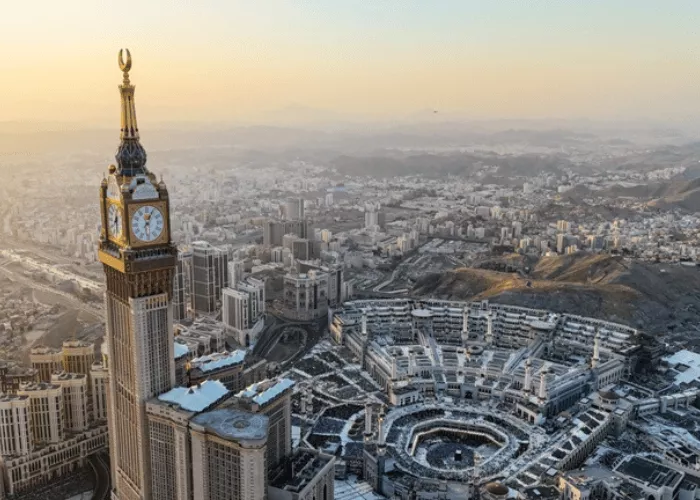
The holiest Islamic city of Saudi Arabia is Makkah, which invites millions of pilgrims and visitors to the sacred place to perform Hajj and Umrah. The sacred place consists of Masjid Al-Haram, which surrounds the Holy Kaaba. The Zamzam well provides the pilgrims, tourists, and visitors with pure and clean water, also known as the blessed water.
Masjid Al Haram is the largest mosque in the world and the most important tourist place in Saudi Arabia for Muslims. The current structure can accommodate over two million worshippers at one time, and during Hajj season this expands further. The mosque has been continuously expanded since the time of the Prophet Muhammad (PBUH), and the modern complex includes seven minarets, 210 entry gates, and the iconic Abraj Al-Bait Clock Tower that dominates the Makkah skyline. At the centre of the mosque stands the Kaaba, the cube-shaped structure covered in black cloth embroidered in gold that Muslims around the world face during prayer. The Mataaf – the marble floor surrounding the Kaaba where pilgrims perform Tawaf (circumambulation) – can be seen from viewing galleries within the mosque on multiple levels. Safa and Marwa, the two hills between which pilgrims perform Sa’i (walking), are enclosed within the mosque complex.
The Cave of Hira on Jabal Al-Nour (Mountain of Light), about three kilometres from Masjid Al Haram, is where the Prophet Muhammad (PBUH) received the first revelation of the Quran. The climb to the cave takes about 30-45 minutes and is a deeply spiritual experience for visiting Muslims. The Cave of Thor (Ghar Thawr) on Jabal Thawr, where the Prophet (PBUH) took shelter during the migration to Madinah, is another profoundly important site. Jabal Al-Rahma (Mount of Mercy) in the plain of Arafat, about 20 kilometres east of Makkah, is where the Prophet delivered his final sermon and where pilgrims gather on the Day of Arafah during Hajj. The Birthplace of the Prophet Muhammad (PBUH), now the site of the Makkah Library near Souq Al Layl, is another site of deep spiritual significance. Please note that entry to Makkah is restricted to Muslims only.
— Tourist places in Saudi Arabia
Hotels near Masjid Al Haram
WITHIN 1 KM OF MASJID AL HARAM:
Fairmont Makkah Clock Royal Tower – The iconic hotel occupying floors 4-43 of the Abraj Al-Bait Clock Tower, directly connected to the mosque’s King Fahd Gate. Average prices: Summer (May-Sep) SAR 1,200-2,500/night, Winter (Oct-Mar) SAR 1,800-4,000/night, Ramadan Peak SAR 3,000-8,000/night, Low Season SAR 900-1,800/night.
Swissotel Al Maqam Makkah – A luxury tower hotel with direct views of the Kaaba from upper floors, connected to the Abraj Al Bait complex. Average prices: Summer SAR 900-1,800/night, Winter SAR 1,400-3,200/night, Ramadan Peak SAR 2,500-6,000/night, Low Season SAR 700-1,500/night.
Hilton Suites Makkah – Located in the Abraj Al-Bait complex with exceptional Kaaba views and full suite facilities. Average prices: Summer SAR 1,000-2,000/night, Winter SAR 1,600-3,500/night, Ramadan Peak SAR 2,800-7,000/night, Low Season SAR 800-1,600/night.
WITHIN 2 KM OF MASJID AL HARAM:
Pullman ZamZam Makkah – A five-star hotel with clear views of the Kaaba and excellent pilgrimage facilities. Average prices: Summer SAR 600-1,200/night, Winter SAR 900-2,000/night, Ramadan Peak SAR 1,800-4,500/night, Low Season SAR 450-900/night.
Marriott Hotel Makkah – Well-appointed hotel with shuttle services to the mosque and comprehensive pilgrimage support. Average prices: Summer SAR 550-1,100/night, Winter SAR 800-1,800/night, Ramadan Peak SAR 1,600-4,000/night, Low Season SAR 400-850/night.
Makkah Clock Royal Tower by Rezidor – A four-star property with direct access to the mosque via elevated walkways. Average prices: Summer SAR 400-800/night, Winter SAR 600-1,400/night, Ramadan Peak SAR 1,200-3,000/night, Low Season SAR 300-650/night.
WITHIN 3 KM OF MASJID AL HARAM:
Sheraton Makkah Jabal Al Kaaba Hotel – Well-located property with good facilities and reasonable prices for the area. Average prices: Summer SAR 350-700/night, Winter SAR 500-1,200/night, Ramadan Peak SAR 1,000-2,500/night, Low Season SAR 280-600/night.
Coral Al Madinah Hotel Makkah – Solid mid-range option with excellent pilgrimage services and comfortable rooms. Average prices: Summer SAR 250-500/night, Winter SAR 350-800/night, Ramadan Peak SAR 800-2,000/night, Low Season SAR 200-450/night.
Al Massa Hotel Makkah – Budget-friendly option with good access to the mosque and basic but clean facilities. Average prices: Summer SAR 150-300/night, Winter SAR 200-500/night, Ramadan Peak SAR 500-1,200/night, Low Season SAR 120-250/night.
Masjid Al Nabawi (Prophet's Mosque) - Madinah
Have you ever heard about the City of Lights when you talk about travelling to Saudi Arabia? Madinah is well known because of Al-Masjid an-Nabawi, the mosque of the final Prophet (PBUH) and his final resting place. The city offers the sight of the first mosque of Islam, named Quba Mosque, and the historic Mount Uhud.
Masjid Al Nabawi, the Prophet’s Mosque, is the second holiest site in Islam and one of the most visited tourist places in Saudi Arabia. The original mosque was built by the Prophet Muhammad (PBUH) himself in 622 CE when he arrived in Madinah, and it has been continuously expanded over the centuries to its current capacity of over 600,000 worshippers, with the ability to accommodate one million during peak periods. The famous Green Dome marks the location of the Prophet’s tomb (PBUH), which is located within the mosque complex. The Rawdah, described in Hadith as a garden of paradise, is the area between the Prophet’s pulpit and his tomb and is particularly sought after for prayer. The mosque features 27 retractable domes that open in pleasant weather and close to maintain temperature control, and the main courtyard has enormous retractable umbrellas that provide shade. The beautifully landscaped courtyards and the quality of architecture throughout the mosque complex make it one of the most impressive religious structures in the world.
Beyond the mosque itself, Madinah has many important historical and spiritual sites. Masjid Quba, the first mosque ever built in Islamic history, is located about 5 kilometres from Masjid Al Nabawi and holds immense spiritual significance. Masjid Al Qiblatain (the Mosque of Two Qiblas) is where the Prophet received the divine command to change the direction of prayer from Jerusalem to Makkah – it is one of the most historically important mosques in Islam. Mount Uhud, about 5 kilometres north of Masjid Al Nabawi, is the site of the Battle of Uhud and contains the graves of the martyrs including Hamza ibn Abd al-Muttalib, the uncle of the Prophet. Masjid Miqat (Dhul-Hulaifah Mosque) is the miqat point where pilgrims travelling from Madinah put on their ihram before proceeding to Makkah. The Dar Al Madinah Museum (Al Musawkaf Market area) is an excellent museum covering the history of Madinah and its significance in Islamic civilisation. The Al Musawkaf Market is the oldest continuously operating market in Madinah.
Hotels near Masjid Al Nabawi (Prophet's Mosque)
WITHIN 1 KM OF MASJID AL NABAWI:
Dar Al Taqwa Hotel Madinah – A five-star hotel with direct views of the Prophet’s Mosque and excellent location directly adjacent to the mosque’s entrance. Average prices: Summer SAR 700-1,400/night, Winter SAR 900-2,000/night, Ramadan Peak SAR 1,800-5,000/night, Low Season SAR 550-1,100/night.
Al Haram Hotel Madinah (Intercontinental) – Premium five-star property with exceptional service and Nabawi Mosque access. Average prices: Summer SAR 650-1,300/night, Winter SAR 850-1,900/night, Ramadan Peak SAR 1,700-4,500/night, Low Season SAR 500-1,050/night.
Anwar Al Madinah Mowenpick Hotel – Luxury hotel directly overlooking Masjid Al Nabawi with outstanding facilities. Average prices: Summer SAR 600-1,200/night, Winter SAR 800-1,800/night, Ramadan Peak SAR 1,600-4,200/night, Low Season SAR 480-1,000/night.
WITHIN 2 KM OF MASJID AL NABAWI:
Oberoi Madinah – The Oberoi’s Madinah property offers five-star luxury with excellent views and service. Average prices: Summer SAR 500-1,000/night, Winter SAR 700-1,600/night, Ramadan Peak SAR 1,400-3,800/night, Low Season SAR 400-850/night.
Crowne Plaza Madinah – A reliable five-star option with shuttle services to the mosque and comprehensive amenities. Average prices: Summer SAR 400-800/night, Winter SAR 600-1,400/night, Ramadan Peak SAR 1,200-3,200/night, Low Season SAR 320-700/night.
Radisson Blu Hotel Madinah – Comfortable four-star property with modern amenities close to the mosque district. Average prices: Summer SAR 300-600/night, Winter SAR 450-1,000/night, Ramadan Peak SAR 900-2,500/night, Low Season SAR 240-550/night.
WITHIN 3 KM OF MASJID AL NABAWI:
Pullman Zamzam Madinah – Well-equipped four-star hotel with a good range of facilities and proximity to the mosque. Average prices: Summer SAR 250-500/night, Winter SAR 380-850/night, Ramadan Peak SAR 800-2,000/night, Low Season SAR 200-420/night.
Madinah Hilton Hotel – Established property with excellent facilities and good location for mosque access. Average prices: Summer SAR 300-600/night, Winter SAR 450-1,000/night, Ramadan Peak SAR 950-2,400/night, Low Season SAR 240-500/night.
Holiday Inn Madinah – Comfortable mid-range option with reliable service and practical amenities. Average prices: Summer SAR 200-400/night, Winter SAR 300-700/night, Ramadan Peak SAR 700-1,800/night, Low Season SAR 160-350/night.
Explore Our Complete Travel Guides
Before diving into the tourist places in Saudi Arabia, explore our complete travel guide collection for more inspiration:
Visit our complete Spain Travel Guide – Things to Do in Barcelona and beyond
Discover our South Korea Travel Guide – Things to See in Seoul Korea
Read our Switzerland Travel Guide – Best Place to Go to Switzerland
Explore our South Africa Travel Guide – Things to Do in South Africa
Check our Thailand Travel Guide – Things to Do in Thailand
Browse our Poland Travel Guide – Things to Do in Poland
View our UK Travel Guide – Best of Britain
Read our Turkey Travel Guide – Best of Turkey
Discover our Pakistan Travel Guide – Tourism in Pakistan
— Tourist places in Saudi Arabia
Riyadh - Capital City Attractions
Saudi Arabia is a country offering a fabulous blend of ancient remnants and modern architecture. The sky bridge at Kingdom Centre Tower provides panoramic views, while the historic district named Diriyah declares Riyadh as the first birthplace of the Saudi state. The Edge of the World near the district provides a cliff-top view, marvellous to view from such an altitude.
Riyadh is one of the fastest-growing cities in the world and the most diverse tourist place in Saudi Arabia for those interested in both modern development and ancient history. The city sits on the Najd plateau at an elevation of about 600 metres, giving it a more temperate climate than the coasts. The Kingdom Centre Tower, at 302 metres one of the tallest buildings in the country, has a sky bridge at the top giving 360-degree views across the city and the surrounding desert. The National Museum of Saudi Arabia in the Al Murabba district is the finest museum in the country and an essential stop for understanding Saudi history and culture, covering the entire span of human settlement on the Arabian Peninsula from prehistoric times to the modern era in eight chronological galleries.
The Masmak Fortress in central Riyadh is where the founder of Saudi Arabia, King Abdulaziz ibn Saud, captured Riyadh from the Al Rashid family in 1902, a pivotal moment in the country’s history. The mud-brick fort has been beautifully restored and is now a museum dedicated to this historic event. Diriyah, about 15 kilometres northwest of central Riyadh, is the original home of the Al Saud family and the founding capital of the First Saudi State in the 18th century. The At-Turaif district of Diriyah, a UNESCO World Heritage Site, is being comprehensively restored and is one of the most impressive archaeological and heritage projects in the Middle East. The King’s Forest (Ghaba) in Riyadh is one of the largest urban forests in the world at 15 square kilometres, providing a remarkable green escape within the city. The Edge of the World (Jebel Fihrayn) about 75 kilometres from Riyadh is one of the most spectacular natural landscapes in Saudi Arabia, a dramatic escarpment dropping 300 metres to the ancient Tethys Sea bed.
— Tourist places in Saudi Arabia
Hotels in Riyadh
Budget: Centro Riyadh by Rotana (from SAR 250/night in low season, SAR 400/night in peak). A well-designed budget hotel in a good central location with clean, modern rooms and essential amenities. Highly rated by business and leisure travellers alike.
Mid-Range: Novotel Riyadh Al Anoud (from SAR 400/night in low season, SAR 700/night in peak). A reliable four-star hotel with excellent facilities including a pool and multiple dining options, well located for both business and sightseeing.
Luxury: Four Seasons Hotel Riyadh at Kingdom Centre (from SAR 1,200/night in low season, SAR 2,500/night peak, Ramadan SAR 1,800+/night). One of the finest hotels in the Middle East, occupying the lower floors of the Kingdom Centre Tower with extraordinary service, a stunning pool terrace, and world-class dining.
Masmak Fortress
The Masmak Fortress is one of the most historically significant tourist places in Saudi Arabia and the defining monument of modern Saudi Arabia’s founding. Built in the late 19th century from mud brick and clay, the fortress served as the base of the Al Rashid rulers of Riyadh until the night of January 15, 1902, when the 26-year-old Abdulaziz ibn Saud led a group of 40 warriors over the walls and captured the fort, beginning the unification of Saudi Arabia. A spearhead lodged in the main gate from that night’s attack is still visible today. The fort has been meticulously restored to its original appearance and contains a comprehensive museum about the founding of Saudi Arabia, with exhibits in Arabic and English covering the history of the Al Saud family, the capture of Riyadh, and the subsequent unification campaign.
National Museum of Saudi Arabia
The National Museum of Saudi Arabia in Riyadh is the most comprehensive museum of Saudi and Arabian history in existence and one of the essential tourist places in Saudi Arabia for understanding the country’s extraordinary depth of history. The museum covers eight themed galleries across 28,000 square metres: Man and the Universe, the Arab Kingdoms, the Pre-Islamic Era, the Prophet’s Mission, Islam and the Arabian Peninsula, the First and Second Saudi States, the Unification of the Kingdom, and the Hajj and the Two Holy Mosques. The exhibits range from fossils and ancient stone tools through to Nabataean inscriptions, early Islamic manuscripts, and items associated with the founding of the modern Saudi state. The museum is housed in the King Abdulaziz Historical Centre, a beautifully designed complex that also includes the Murabba Palace, the original palace of King Abdulaziz.
Edge of the World (Jebel Fihrayn)
The Edge of the World is one of the most dramatic natural tourist places in Saudi Arabia and one of the most spectacular landscapes in the entire Arabian Peninsula. Located about 75 kilometres northwest of Riyadh in the Tuwaiq Escarpment, the site is a sheer cliff dropping approximately 300 metres to the ancient Tethys Sea bed, the geological formation that was covered by a shallow sea millions of years ago. Standing at the edge and looking out over the vast flat plain stretching to the horizon, with the wind howling up the cliff face, gives a powerful sense of the geological scale of the Arabian landscape. The hike along the rim of the escarpment is about 3 kilometres and takes about two hours. The site is particularly spectacular at sunset when the light turns the limestone red and gold. A four-wheel-drive vehicle is recommended for the final approach.
— Tourist places in Saudi Arabia
Kingdom Centre Tower and Sky Bridge
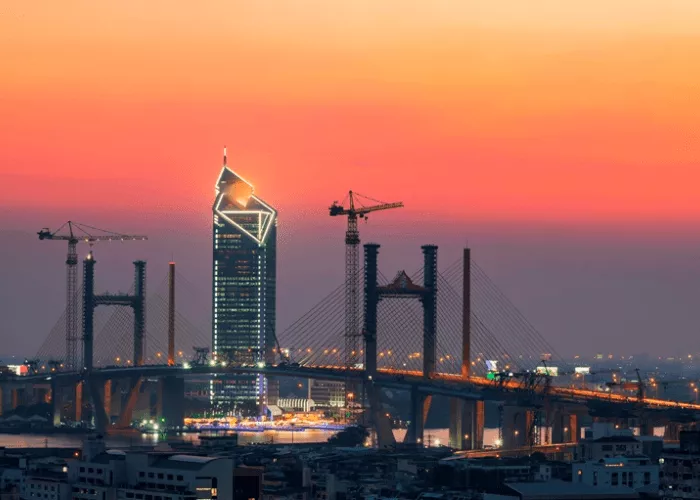
The Kingdom Centre Tower in Riyadh is one of the most recognisable tourist places in Saudi Arabia and an iconic symbol of modern Riyadh. Standing 302 metres tall with a distinctive inverted parabolic arch at the top, the tower contains a luxury shopping mall (Kingdom Mall), the Four Seasons Hotel, offices, residences, and the Sky Bridge at 300 metres which gives extraordinary 360-degree panoramic views across the city and the surrounding desert. The bridge is open to visitors for a fee and is one of the best viewpoints in Saudi Arabia. The tower was designed by Ellerbe Becket and HOK Architects and won the Emporis Skyscraper Award in 2002 as the world’s best new skyscraper.
— Tourist places in Saudi Arabia
Diriyah - Birthplace of the Saudi State
Diriyah, about 15 kilometres northwest of central Riyadh on the banks of Wadi Hanifa, is the original home of the Al Saud family and one of the most important historical tourist places in Saudi Arabia. The At-Turaif district, a UNESCO World Heritage Site since 2010, is the mud-brick old city where the First Saudi State was founded in 1727 and the seat of power for the Al Saud family for nearly a century. The restoration of At-Turaif is one of the most ambitious heritage projects in the Middle East, with dozens of palaces, mosques, and traditional residences being meticulously restored using traditional Najdi construction techniques. The Al Bujairi Heritage Park adjacent to At-Turaif has excellent restaurants, cafes, and craft shops in a beautifully restored traditional setting. The Diriyah Season, held annually from October to February, brings cultural events, performances, and exhibitions to the area.
AlUla and Hegra (Madain Saleh)
Termed as Arabia’s Ancient Wonder, the city of Hegra (Madain Saleh) holds archaeological importance, attracting thousands of tourists who explore the Nabataean tombs carved into sandstone cliffs. This place is also famous for being a part of the UNESCO World Heritage Site. This ancient city invites visitors to explore the 2,000-year-old archaeological marvels, surpassing its Jordanian counterpart.
AlUla is perhaps the most extraordinary tourist place in Saudi Arabia for those interested in history, archaeology, and natural landscapes. The AlUla valley in the Hejaz region is home to one of the most concentrated collections of ancient ruins in Arabia. Hegra, the first site in Saudi Arabia to be inscribed as a UNESCO World Heritage Site, contains over 100 Nabataean tombs carved into rose-coloured sandstone cliffs, many with elaborately decorated facades, from the 1st century BCE to the 1st century CE. The Nabataeans were the extraordinary Arabian trading civilization who also built Petra in Jordan, and Hegra (also called Madain Saleh) gives a less crowded and arguably more atmospheric experience of their architecture than Petra itself. Qasr Al Farid, the unfinished Nabataean tomb standing alone in the desert, is one of the most photographed images of Saudi Arabia.
AlUla’s natural landscape is extraordinary in its own right. The Elephant Rock (Jabal Al Fil) is a massive natural rock formation 52 metres tall that has been sculpted by wind erosion into the unmistakable shape of an elephant drinking from the ground. It is one of the most visited natural sites in Saudi Arabia. The Jubbah Rock Carvings north of AlUla are UNESCO-listed petroglyphs dating back at least 10,000 years, depicting camels, horses, hunting scenes, and human figures in extraordinary detail. The Maraya Concert Hall, the world’s largest mirror-clad building, reflects the surrounding desert and mountains and hosts world-class cultural events. The Dadan ancient city ruins within the AlUla valley, dating to the Dadanite and Lihyanite kingdoms of the 1st millennium BCE, add another archaeological layer to this extraordinary region.
Hotels in AlUla
Budget: AlUla Homes (from SAR 300/night low season, SAR 550/night peak). A collection of traditional-style desert guesthouses offering comfortable accommodation at accessible prices. Summer SAR 300-450/night, Winter SAR 450-700/night, Low Season SAR 200-350/night.
Mid-Range: Shaden Resort AlUla (from SAR 600/night). A beautifully designed resort built around traditional AlUla architecture with pool and excellent breakfast. Summer SAR 550-800/night, Winter SAR 700-1,100/night, Low Season SAR 450-650/night.
Luxury: Habitas AlUla (from SAR 2,500/night). One of the most celebrated eco-luxury resorts in the Middle East, set within a natural valley with extraordinary design, outstanding food, and access to the archaeological sites. Summer SAR 2,000-3,500/night, Winter SAR 2,500-5,000/night, Low Season SAR 1,800-2,800/night.
Jeddah - The Gateway to the Hijaz
UNESCO-listed Al-Balad, also called Old Jeddah, accommodates various architectural structures and ancient remnants. Along the Red Sea is the Jeddah Corniche that offers waterfront dining and recreation memories. The Floating Mosque creates stunning reflections during the sunsets, offering a panoramic view of the city.
Jeddah is the most diverse and cosmopolitan tourist place in Saudi Arabia, a city that has served for centuries as the gateway to Makkah for pilgrims arriving by sea and as the commercial capital of the Hejaz. Al Balad, the UNESCO-listed historic district of Jeddah, is one of the finest examples of traditional Hejazi architecture in existence. The five-storey coral-brick townhouses with their elaborately carved wooden mashrabiya balconies (latticework screens allowing air circulation and privacy) are one of the most distinctive architectural traditions in the Islamic world. The Naseef House, the grandest merchant house in Al Balad, is now a museum open to visitors. The Matbouli House Museum preserves the interiors of a traditional Hejazi merchant’s home. The Pearl Merchants’ Neighbourhood gives a sense of the enormous wealth that flowed through Jeddah in the pre-oil era from the pearl trade and pilgrimage commerce.
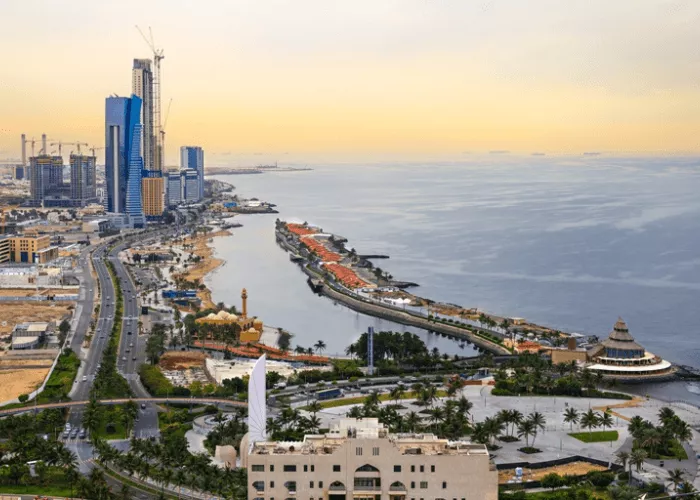
The Jeddah Corniche is a 30-kilometre waterfront promenade along the Red Sea that is one of the most pleasant urban walks in Saudi Arabia, lined with parks, sculptures, and the famous Al Rahmah (Floating) Mosque which sits on the sea at high tide. The King Fahd Fountain, the tallest fountain in the world at 312 metres, is visible from across the city and is especially spectacular at night when lit with coloured lights. Souq Al Alawi in the heart of Al Balad is one of the oldest and most atmospheric traditional markets in the country, selling gold, spices, traditional clothing, and handicrafts. The Al Tayibat City Museum for International Civilisation is one of the largest private museums in Saudi Arabia, spread across a complex of traditional Hejazi buildings and containing an extraordinary collection of Islamic art, furniture, and historical artefacts from across the Islamic world. The Al Shafee and Al Mudaifar mosques in Al Balad are among the oldest Islamic buildings in Jeddah
Hotels in Jeddah
Budget: Holiday Inn Jeddah Al Salam (from SAR 280/night low season, SAR 450/night peak). A reliable international brand hotel in a good central location with pool and essential amenities at accessible prices.
Mid-Range: Radisson Blu Hotel Jeddah Corniche (from SAR 550/night low season, SAR 900/night peak). An excellent four-star property directly on the Corniche with sea views, pool, and multiple dining options.
Luxury: Shangri-La Hotel Jeddah (from SAR 1,200/night low season, SAR 2,200/night peak, Ramadan SAR 1,600+/night). The finest luxury hotel in Jeddah with exceptional service, multiple restaurants, an extraordinary pool terrace overlooking the Red Sea, and the most complete spa in the city.
Al Balad - UNESCO Historic Jeddah
Al Balad, the historic district of Jeddah and one of the most important tourist places in Saudi Arabia, was inscribed as a UNESCO World Heritage Site in 2014 in recognition of its extraordinary traditional Hejazi architecture. The district developed over 1,400 years as the arrival point for pilgrims travelling to Makkah and as a major commercial hub for trade between the Arabian Peninsula, Africa, and Asia. The three-to-five-storey coral-stone buildings with their ornately carved wooden balconies (rawasheen) are unique in the world and were recently at serious risk of collapse due to decades of neglect. A major restoration and conservation program is now underway, and visiting Al Balad today means experiencing one of the most atmospheric old cities in the Middle East. The best time to visit is early morning or after sunset, when the light is most beautiful and the heat is manageable. The Bab Makkah gate (Mecca Gate) and the Bab Sharif gate are the most ornate of the traditional city gates and good orientation points.
Al Bastah and Al Qessar Markets - Jeddah
Al Bastah and Al Qessar are traditional market areas within the Al Balad district of Jeddah and essential stops on any exploration of the tourist places in Saudi Arabia’s oldest city. Al Bastah specialises in antiques, traditional Saudi handicrafts, prayer beads, incense, traditional clothing, and curiosities from across the Islamic world – it is the finest antique market in Saudi Arabia. Al Qessar is a traditional fabric and textile market where merchants sell everything from silks and brocades to traditional Hejazi cotton weaves. The combination of the two markets with the Souq Al Alawi gold market nearby makes this the best traditional shopping district in Saudi Arabia.
— Tourist places in Saudi Arabia
Abha - Mountain City of Flowers
If you want to examine the mountain scenery after visiting the tourist places in Saudi Arabia along the coast, Abha is the place where you should go. Located near the Asir Mountains, the colourful buildings of the city offer a panoramic view. Rijal Almaa Heritage Village showcases Asir construction techniques and cable cars that provide access to the sky-high mountain peaks.
Abha is one of the most beautiful and least-visited tourist places in Saudi Arabia, a mountain city at 2,200 metres elevation in the Asir region that has a temperate climate completely unlike the rest of the country. The Asir Mountains around Abha receive significant rainfall, making the region unusually green and fertile – the mountain terraces, wildflower meadows, and juniper forests of Asir National Park look nothing like what most people imagine Saudi Arabia to be. Al Habala (the Suspended Village) is a community that historically hung on the edge of a sheer cliff in the Asir Mountains, accessible only by rope – today a cable car brings visitors to this extraordinary settlement. The Sky Bridge in the Abha area gives panoramic views across the Asir Mountains and the coastal plain. Al Muftaha Village, a traditional Asir village being restored, displays the distinctive architectural style of the Asir people – mud-brick towers decorated with colourful painted designs and overhanging slates. The Asir National Park around Abha has excellent hiking trails through juniper forests and along mountain ridges.
— Tourist places in Saudi Arabia
Hotels in Abha
Budget: Abha Palace Hotel (from SAR 180/night low season, SAR 300/night peak). A simple but clean hotel in central Abha with basic amenities and good access to the main sights.
Mid-Range: Abha Corniche Hotel (from SAR 350/night low season, SAR 550/night peak). A comfortable four-star property with mountain views, pool, and good dining facilities.
Luxury: Hotel Abha Rose (from SAR 650/night low season, SAR 1,100/night peak). The finest hotel in Abha with spectacular mountain views, comprehensive spa facilities, and the best restaurant in the city.
Taif - City of Roses
Taif is termed the City of Roses because its location at high altitudes promotes the cultivation of roses, making it famous all over the world for roses and fresh rose water. There are traditional souks for tourists and visitors to shop. Cable cars are available that provide access to the scenic view of the high peak mountains.
Taif is one of the most pleasant and fragrant tourist places in Saudi Arabia, a mountain city at 1,800 metres elevation that serves as a summer escape from the heat for residents of Makkah, Jeddah, and Riyadh. The Taif rose industry is genuinely extraordinary – the Al Taif roses (a variety called Damascene or Hejazi roses) bloom in March and April, and the harvest season when the rose oil is extracted is one of the most atmospheric annual events in the country. The Shubra Palace, originally built in 1905 as a summer residence for the Ottoman Sheriff of Makkah, is now a museum with excellent collections of regional history. The Taif Souq is one of the best traditional markets in the Hijaz region, particularly for honey (Taif is famous for its sidr honey), fresh fruit, rose water, and traditional handicrafts. The Hejaz Substation and Fort, and the Ottoman Hejaz Railway history in and around Taif, give interesting glimpses of the region’s Ottoman-era heritage. Historical places in Taif include the Qantara bridge ruins and several mosques of significant antiquity.
Hotels in Taif
Budget: Al Hada Mountain Hotel (from SAR 200/night low season, SAR 380/night peak). A simple mountain resort with good views and clean rooms at accessible prices.
Mid-Range: Intercontinental Taif (from SAR 450/night low season, SAR 750/night peak). The most established international brand hotel in Taif with comprehensive facilities, pool, and mountain setting.
Luxury: Coral Taif Hotel (from SAR 700/night low season, SAR 1,200/night peak). The finest luxury property in Taif with exceptional facilities, a full spa, and outstanding views across the mountains.
Dammam and Al Khobar - Eastern Province
A blend of the Eastern Coast with modern urban development leads to a city named Dammam. Half Moon Bay serves delicate shorelines, and its sound is just breathtaking. If you move to the town, there are fine dining options and artistic designs that lead to a unique and perfect experience whenever you visit tourist places in Saudi Arabia.
The Eastern Province is the heart of Saudi Arabia’s oil industry and one of the most economically significant regions in the world, but it also has genuine tourist attractions. Al Khobar and its adjacent cities of Dammam and Dhahran form a modern, cosmopolitan urban cluster along the Arabian Gulf. The Corniche of Al Khobar is a well-maintained waterfront promenade with excellent seafood restaurants, coffee shops, and views across the Gulf to Bahrain. Half Moon Bay (Dawhat Salwa) about 30 kilometres south of Al Khobar is one of the finest natural beaches on the Arabian Gulf, with calm, clear water and extensive recreational facilities. The King Abdulaziz Heritage Castle in Hail and the White Castle (Qasr Khuraibah) nearby are impressive historical fortifications of the region. Al Ahsa (Al Hasa), about 60 kilometres from Dammam, is home to the world’s largest oasis – a UNESCO World Heritage Site of extraordinary palm forests, ancient irrigation systems, traditional souqs, and the Jawatha Mosque, one of the oldest mosques in the Eastern Province.
Hotels in Dammam and Al Khobar
Budget: Dammam Palace Hotel (from SAR 200/night low season, SAR 350/night peak). Decent accommodation in central Dammam with good facilities for the price.
Mid-Range: Radisson Blu Hotel Dhahran (from SAR 450/night low season, SAR 700/night peak). An excellent four-star property in Dhahran with pool and full facilities, popular with business travellers and families alike.
Luxury: Sofitel Al Khobar The Corniche (from SAR 900/night low season, SAR 1,600/night peak). The finest hotel in the Eastern Province, directly on the Al Khobar Corniche with extraordinary sea views, exceptional French-influenced dining, and the best spa in the region.
— Tourist places in Saudi Arabia
NEOM - The City of the Future
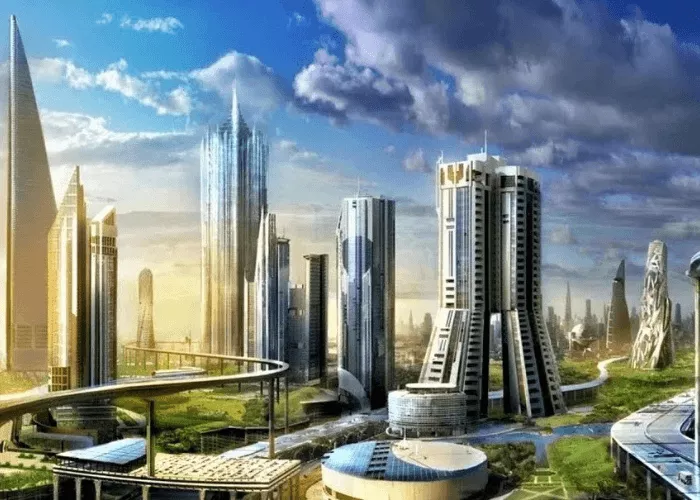
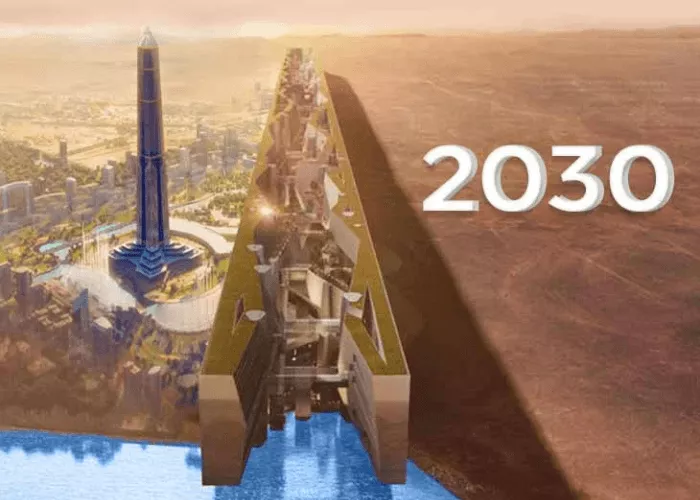
Saudi Arabia is making progress in promoting tourism and inviting tourists and visitors from all over the world. NEOM, one of the most ambitious development projects in human history, is located along the Red Sea coastline of northwest Saudi Arabia in the Tabuk region. The site covers 26,500 square kilometres and includes multiple mega-project components: THE LINE, a linear city 170 kilometres long and just 200 metres wide powered entirely by renewable energy; TROJENA, a mountain ski and adventure resort in the highlands at 1,500 metres elevation with year-round outdoor snow; and SINDALAH Island, a luxury yacht marina and island resort in the Red Sea. The Bir Al Mashy Beach in the NEOM region is one of the most pristine stretches of the Red Sea coast, with exceptional coral reefs and diving. Shebara Resort nearby is a remarkable offshore floating bungalow resort.
— Tourist places in Saudi Arabia
Hail - Gateway to the Northern Desert
If you visit tourist places in Saudi Arabia, there could be various reasons. Whether you want to visit the sky-high mountains, explore the urbanization of modern cities, or discover the desert areas of the country, Saudi Arabia is ready to welcome you. Historical art, Saudi desert culture, and ancient rock art are all displayed in the city of Hail.
Hail is one of the most historically significant tourist places in Saudi Arabia and serves as the gateway to the northern desert regions. The city was the seat of the Al Rashid dynasty, the great rivals of the Al Saud family who ruled much of northern Arabia in the late 19th and early 20th centuries. The A’arif Fort and the Barzan Fort are two magnificent medieval towers that remain from this era. The Hail Flea Market is one of the most interesting traditional markets in northern Saudi Arabia. The Jubbah Rock Carvings UNESCO World Heritage Site about 90 kilometres north of Hail contains some of the most important prehistoric rock art in the Arabian Peninsula, with petroglyphs of camels, horses, and human figures dating back at least 10,000 years. The Al Nafud Desert, the great red sand sea that stretches north of Hail, is one of the most spectacular natural tourist places in Saudi Arabia for desert camping and dune exploration. The Al Nafud (also called the Great Nafud) covers about 65,000 square kilometres and has distinctive crescent-shaped dunes of red sand.
Hotels in Hail
Budget: Al Najd Hotel Hail (from SAR 150/night low season, SAR 280/night peak). Basic but clean accommodation in central Hail with good access to the main sights.
Mid-Range: Millennium Hotel Hail (from SAR 380/night low season, SAR 600/night peak). The best international hotel in Hail with full facilities including pool and multiple dining options.
Luxury: Hail Marriott Hotel (from SAR 650/night low season, SAR 1,000/night peak). The finest property in Hail with comprehensive amenities and the most complete services in the city.
Yanbu - Historic Port and Red Sea Diving
Yanbu is one of the most underrated tourist places in Saudi Arabia, a historic port city on the Red Sea coast that served for centuries as the main port of Madinah. The Historic Yanbu and Port area (Al Balad Al Qadim) preserves a collection of traditional Hejazi buildings similar to those of Jeddah’s Al Balad, though smaller and less restored. The Masjid Al Qiblatain nearby holds a claim to being one of the mosques where the change in prayer direction from Jerusalem to Makkah was first made. The Ottoman Hejaz Railway Bridge near Yanbu is one of the remaining vestiges of the Hejaz Railway that connected Istanbul to Madinah – the railway was made famous by Lawrence of Arabia and was one of the great engineering projects of the Ottoman Empire. The Al Buwayr Hejaz Railway Station and Fort are other interesting remnants of this railway history. The Red Sea coastline around Yanbu has some of the finest coral reef diving in the world, with clear water, exceptional coral formations, and extraordinary marine life including manta rays, whale sharks, and dozens of species of tropical fish.
Hotels in Yanbu
Budget: Yanbu Gulf Hotel (from SAR 180/night low season, SAR 320/night peak). A simple clean hotel with good access to the historic district and the corniche.
Mid-Range: Movenpick Resort Yanbu (from SAR 450/night low season, SAR 750/night peak). The most complete resort in Yanbu with a private beach, watersports, pool, and multiple dining options.
Luxury: Coral Hotel Yanbu (from SAR 650/night low season, SAR 1,000/night peak). The finest property in Yanbu with excellent Red Sea views, comprehensive facilities, and the best restaurant in the city.
Wahba Crater
The Wahba Crater is one of the most spectacular natural tourist places in Saudi Arabia, a massive volcanic crater about 250 kilometres northwest of Taif. The crater is approximately 2 kilometres in diameter and 250 metres deep, with dramatic white salt deposits at its base that create a vivid contrast with the dark basalt rim. The hike down into the crater takes about an hour and gives a powerful sense of the geological forces that created this extraordinary landscape. The crater was formed about 20,000 years ago by a phreatomagmatic eruption – a particularly violent type of volcanic event caused by magma meeting groundwater. The surrounding landscape of black basalt lava fields (harrat) stretches for hundreds of kilometres and is one of the most geologically dramatic environments in the Arabian Peninsula.
— Tourist places in Saudi Arabia
Tabuk and Northwest Saudi Arabia
Tabuk, the capital of the Tabuk region in northwest Saudi Arabia, is one of the most historically interesting tourist places in Saudi Arabia, particularly for its Ottoman heritage and its proximity to the extraordinary landscapes of the northwest. The Tabuk Castle (Al Qal’ah) in the city centre is a well-preserved Ottoman fort that also served as a stopping point for pilgrims on the Madinah pilgrimage route from Syria.
The Hejaz Locomotive and Ruins near Tabuk are fascinating remnants of the Ottoman Hejaz Railway, with several steam locomotives still standing in the desert where they were abandoned after Lawrence of Arabia’s guerrilla campaign against the railway during World War I. The Jebel Al Lawz (Jabal Al Lawz) mountain in the Tabuk region, at 2,549 metres the highest peak in Saudi Arabia, is a dramatic destination for trekking and camping. The Al Sharim Beach on the Gulf of Aqaba has some of the finest snorkelling and diving in the Red Sea system.
— Tourist places in Saudi Arabia
Hotels in Tabuk
Budget: Tabuk Hotel (from SAR 160/night low season, SAR 280/night peak). Decent central accommodation with basic amenities and good location.
Mid-Range: Ramada by Wyndham Tabuk (from SAR 350/night low season, SAR 580/night peak). A reliable international brand hotel with pool and modern facilities.
Luxury: Tabuk Marriott Hotel (from SAR 600/night low season, SAR 950/night peak). The finest hotel in Tabuk with comprehensive amenities and the best service in the region.
Madain Saleh (Hegra) - UNESCO World Heritage Site
Madain Saleh, officially known as Hegra, is without question one of the most spectacular tourist places in Saudi Arabia and one of the finest archaeological sites in the world. The site contains 111 well-preserved Nabataean tombs dating primarily from the 1st century BCE to the 1st century CE, carved directly into the rose-coloured sandstone rocks of the AlUla valley. The Nabataeans were a nomadic Arab people who established a trading empire stretching from the Hejaz to the Levant, and their capital was Petra in Jordan. Hegra (Madain Saleh) was the southern capital of the Nabataean kingdom and contains some of the finest examples of Nabataean monumental architecture outside Petra, often in better condition because the site was largely undisturbed for centuries.
The tombs at Hegra are remarkable for their elaborately carved facades, which typically feature carved eagles, serpents, and inscriptions in the Nabataean script recording the name of the tomb owner and protective curses against desecration. The largest of the tombs, Qasr Al Farid, stands 22 metres tall and is unique in that it was left unfinished, which gives an extraordinary insight into the techniques the Nabataean craftsmen used. The site also contains the remains of a Nabataean city with streets, houses, a temple, and wells, as well as inscriptions from pre-Nabataean civilizations that demonstrate the site’s even longer history. The Al Hijr Archaeological Zone of Hegra became Saudi Arabia’s first UNESCO World Heritage Site in 2008.
Corniche - Jeddah and Saudi Coastal Attractions
The Jeddah Corniche, stretching 30 kilometres along the Red Sea waterfront, is one of the finest promenades in the Middle East and one of the most popular tourist places in Saudi Arabia. The Corniche includes beautifully landscaped parks, cycling and jogging paths, fishing piers, contemporary sculpture, and the Al Balad waterfront. The Al Rahmah Mosque (Floating Mosque), which appears to float on the water of the Red Sea at high tide, is one of the most photographed landmarks in Jeddah. The King Fahd Fountain on the waterfront is the tallest fountain in the world. Bir Al Mashy Beach in the NEOM region, Al Sharim Beach near Tabuk, the beaches of the Farasan Islands near Jizan, and the Red Sea coast around Yanbu all offer outstanding coastal experiences including some of the world’s finest diving and snorkelling over coral reefs that are largely undamaged due to their remoteness from mass tourism.
The Empty Quarter (Rub Al Khali)
The Empty Quarter, known in Arabic as Rub Al Khali, is the largest continuous sand desert in the world and one of the most extraordinary natural tourist places in Saudi Arabia. Covering about 650,000 square kilometres across Saudi Arabia, Oman, the UAE, and Yemen, the Saudi portion of the Empty Quarter in the south of the country contains some of the world’s highest sand dunes, with some reaching 250 metres. The landscape of towering orange and red dunes, silent except for the wind, is one of the most overwhelming natural environments on earth. The city of Najran in the far south of Saudi Arabia is the main gateway to the Empty Quarter for visitors. Dates City near Najran produces some of the finest dates in the world from the ancient date palm oases of the region. Al Nasb and Al Yanfa are settlement areas within the Empty Quarter region where Bedouin culture and desert life can be experienced authentically.
Exhibition of the Two Holy Mosques
The Exhibition of the Two Holy Mosques in Makkah is one of the most informative tourist places in Saudi Arabia for understanding the history and development of both Masjid Al Haram and Masjid Al Nabawi. The exhibition houses scale models of both mosques showing their development from the original structures to their current forms, along with historical artefacts, architectural drawings, and displays about the construction techniques and expansion projects. For visitors who cannot access the mosques themselves, or for Muslims seeking a deeper understanding of the history of these sacred spaces, the exhibition is an invaluable resource. A similar exhibition is also available in Madinah.
Quba Mosque - Madinah
Quba Mosque, located about 5 kilometres southwest of Masjid Al Nabawi in Madinah, holds the distinction of being the first mosque ever built in Islamic history. The Prophet Muhammad (PBUH) laid its foundation stones upon his arrival in Madinah during the Hijra (migration from Makkah) in 622 CE. The Hadith states that praying two rakats in Quba Mosque equals the reward of performing Umrah. The current structure is a modern building constructed in the 1980s that replaced earlier versions, but the site is one of the most spiritually significant tourist places in Saudi Arabia for Muslim visitors. The mosque can accommodate about 20,000 worshippers and features a beautiful white facade with multiple small domes.
— Tourist places in Saudi Arabia
Jizan and the Farasan Islands
Jizan (Jazan) in the extreme southwest of Saudi Arabia, bordering Yemen, is one of the most climatically distinct and culturally rich tourist places in Saudi Arabia. The Farasan Islands, located about 40 kilometres offshore from Jizan in the Red Sea, are an archipelago of about 84 islands with extraordinary coral reefs, crystal-clear water, historic Ottoman ruins, and exceptional birdwatching. The islands are home to the Arabian sand gazelle and are one of the best places in the country for snorkelling and diving. Al Qahmah Beach near Jizan is another excellent coastal destination. The Jizan region has a distinct cultural identity influenced by its position at the crossroads of the Hejaz, Yemen, and the Red Sea trade routes.
Globe Experience and Modern Attractions
The Globe Experience at NEOM is part of Saudi Arabia’s bold new generation of experiential tourist attractions. Saudi Arabia’s Vision 2030 transformation has produced a remarkable range of new cultural and entertainment facilities. The Six Flags theme park at Qiddiya City near Riyadh is one of the largest entertainment complexes in the Middle East. Boulevard World in Riyadh is a 24/7 entertainment district themed around international cultures. The Riyadh Season (October to March) is one of the largest entertainment festivals in the world, transforming the capital into a city of events, exhibitions, performances, and experiences. Dates City near Najran and Al Ahsa’s date palm oases showcase traditional Saudi agricultural heritage in a way that is genuinely fascinating for visitors.
— Tourist places in Saudi Arabia
Hejaz Railway - Ottoman Heritage
The Hejaz Railway is one of the most historically fascinating tourist places in Saudi Arabia, a testament to the extraordinary ambitions of the late Ottoman Empire and the ingenuity of the engineers who built a railway through some of the world’s most hostile terrain. The railway was built between 1900 and 1908 to connect Damascus to Madinah (with an eventual goal of reaching Makkah) and was used primarily by Hajj pilgrims. It was famously attacked and disrupted by T.E. Lawrence (Lawrence of Arabia) and Arab irregular forces during World War I, and never fully restored. The remaining structures scattered across northwest Saudi Arabia – including the Ottoman Hejaz Railway Station and Bridge near Madinah, the Hejaz Substation and Fort near Tabuk, the Al Buwayr Station and Fort near Yanbu, the ruins of bridges and stations in the desert – are among the most atmospheric historical sites in the country.
Natural Wonders of Saudi Arabia
Saudi Arabia contains a remarkable variety of natural landscapes that are increasingly being recognised as extraordinary tourist places in Saudi Arabia. The Al Naslaa Rock near Tayma is a sandstone formation that has been perfectly split into two halves by natural geological processes, with each half balanced on a separate pedestal – it appears so precisely cut that some have speculated about ancient laser technology, though the reality of natural erosion is equally impressive. Jabal Al Lawz in Tabuk, at 2,549 metres the highest peak in Saudi Arabia, offers challenging trekking and extraordinary mountain scenery. The Harrat Khaybar volcanic field near Madinah is one of the world’s great dark lava landscapes, with dozens of volcanic cones and extensive basalt flows. King’s Forest (Ghaba) in Riyadh is an extraordinary urban forest. The Asir National Park around Abha contains the most biodiverse landscapes in Saudi Arabia, with green mountains, terraced farms, and a remarkable variety of birds including the endemic Arabian sunbird. Mt Soudah in the Asir region, at 3,005 metres the highest accessible mountain in Saudi Arabia, has a cable car and is surrounded by spectacular alpine scenery.
Culture and Modern World of Saudi Arabia
When you visit tourist places in Saudi Arabia, after all kinds of religious practices, you want to enjoy some cultural charms. You can attend the Riyadh season or the Jeddah season festival to make your trip to Saudi Arabia memorable and praiseworthy. There are international performances, culinary arts, and a reflection of the culture of Saudi Arabia that is worth praising.
When it comes to the traditional food of Saudi Arabia, you can try kabsa, mutabbaq, and jareesh. Souq Al-Alawi in Jeddah or modern malls like Kingdom Centre in Riyadh offer the best shopping spots. You can explore the world’s largest mirrored building in Maraya AlUla to get a unique and different experience.
Saudi culture is rich, complex, and rapidly changing. Traditional Bedouin hospitality – offering dates and qahwa (cardamom coffee) to guests as an almost sacred obligation – remains genuine throughout the country even as the cities modernise at extraordinary speed. The sword dance (Al Ardha), the national dance of Saudi Arabia, is performed at major celebrations and festivals with traditional costumes and poetry recitation. Traditional crafts including Sadu weaving, silver jewellery making, and pottery are being preserved through craft centres and heritage markets. The Falconry tradition, which has been practised in Arabia for over 3,000 years, is now a UNESCO-recognised Intangible Cultural Heritage and central to Saudi identity. The Arabic language, Arabic calligraphy, and Islamic geometric art are all deeply woven into the aesthetic of the country and visible everywhere from mosque decoration to modern architecture.
Adventure in Saudi Arabia
If you want to experience camping under the vast sky and twinkling stars, there is AlUla’s desert in Saudi Arabia. If you visit tourist places in Saudi Arabia, you will get details about the safe camping equipment and security measures. You can visit The Edge of the World near Riyadh to explore the high cliff mountains along with desert vistas.
If you are a beach lover, you can visit the Red Sea, nestled along the Saudi Arabian coastline. In Yanbu and Jeddah, perfect diving spots are offered. In case you want to hike, the Asir mountain provides an ideal hiking spot in Abha with well-marked trails to make the most of your visit to Saudi Arabia.
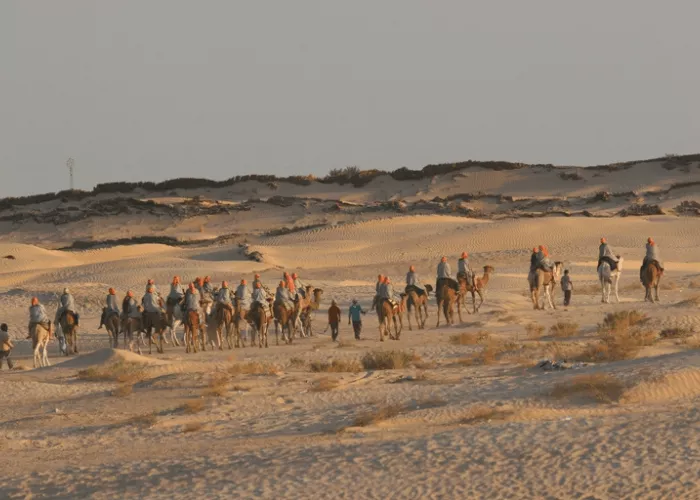
Saudi Arabia’s adventure tourism sector is developing rapidly as part of Vision 2030. The Red Sea coast around Yanbu and Jeddah has some of the world’s most pristine coral reefs for diving and snorkelling, with visibility regularly exceeding 30 metres. The Empty Quarter in the south offers camel trekking, dune bashing, sandboarding, and star gazing experiences in the most isolated desert on earth. Rock climbing at AlUla, where the sandstone formations offer exceptional climbing on solid ancient rock, is developing a strong international following. Dune bashing in the Arabian desert, whether in the Empty Quarter, the Al Nafud, or the desert areas around Riyadh, is one of the most exhilarating off-road experiences available to visitors. Mountain biking trails are developing rapidly in both the Asir Mountains and the AlUla region.
Accommodation in Saudi Arabia
Suppose you come to Saudi Arabia, where you experience various forms of entertainment and religious practices. You want a clean and comfortable environment to live and spend time at home. Saudi Arabia is accommodating locals and international visitors by providing a range of basic and luxury facilities.
Budget-friendly accommodations provide an environment worth praising within a range of SAR 150-280 ($40-75) per night. Mid-range accommodations are also available with all the basic facilities, a clean environment, parking service, room service, panoramic views from windows and balconies, and culinary availability. They are available within a range of SAR 280-600 ($75-160) per night.
Luxury accommodations are also available in Saudi Arabia. They are primarily available in Makkah and Madinah near Masjid Al-Haram offering a breathtaking view of the Holy Kaaba, within a price range of SAR 600-3,000+ ($160-800+) per night. Ready to book your accommodations with Booking.com?
Food and Dining Experience in Saudi Arabia
You can enjoy local food in Saudi Arabia as a local or a tourist at different places. This local food may include Kabsa, Mandi, and fresh bread, which can be a delightful treat. The price range is SAR 20-40 per person in most places.
Mid-range restaurants may include local as well as international cuisine. This variety can help tourists and foreign visitors enjoy their favourite cuisine in the form of international culinary art. The price range varies from SAR 50 to SAR 120 per person. Luxury hotels in Riyadh and Jeddah offer fine dining experiences ranging from SAR 180 to SAR 600+ per person.
The national dish of Saudi Arabia is Kabsa – spiced rice cooked with meat (usually chicken, lamb, or camel) and vegetables, seasoned with cardamom, cinnamon, black lime, cloves, and black pepper. Mutabbaq (stuffed pancake with meat or cheese), Jareesh (crushed wheat dish), Saleeg (white rice cooked in broth with milk), and Harees (wheat and meat porridge) are other traditional dishes essential to Saudi cuisine. Saudi dates are among the finest in the world, and the date markets of Al Ahsa, Madinah, and Riyadh are worth visiting for both their variety and their cultural significance. Arabic coffee (qahwa) flavoured with cardamom and saffron, and fresh mint tea, are the quintessential beverages of Saudi hospitality.
— Tourist places in Saudi Arabia
Best Time to Visit Saudi Arabia
If you are looking for ideal weather to come to Saudi Arabia, the months from October to March are the best time to visit the country. The months of April and May are ideal for outdoor activities in highlands like Taif, Abha, and AlUla. The months of June to September lead to extreme weather conditions in most parts of the country, with temperatures regularly exceeding 45°C in cities like Riyadh and Jeddah.
Winter (November to February) is the finest overall season for the tourist places in Saudi Arabia, with temperatures of 15-25°C in the central and northern regions, making outdoor activities, archaeological sites, and city sightseeing comfortable. Ramadan, which moves through the calendar and can fall in any season, gives an extraordinary cultural experience of Saudi Arabia at its most spiritually intense – the evenings of Ramadan with their Iftar gatherings, illuminated mosques, and social celebrations are unlike any other time of year.
The AlUla Winter at Tantora festival from December to March brings world-class cultural events to the desert. The Taif rose season in March-April is spectacular. The Hajj season, which also moves through the calendar, brings millions of pilgrims to Makkah and Madinah – non-pilgrims should avoid these cities during Hajj but other parts of Saudi Arabia remain accessible.
— Tourist places in Saudi Arabia
Transportation in Saudi Arabia
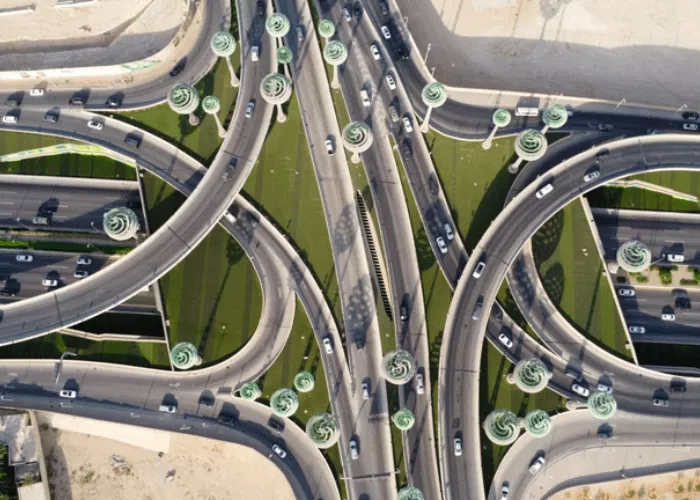
Haramain High-Speed Railway connects Makkah, Madinah, Jeddah, and King Abdulaziz International Airport with modern, comfortable trains. Saudi Arabian Airlines serves as a domestic airline that helps to travel within the country. A car rental system is also available when you visit tourist places in Saudi Arabia to enjoy the best transportation services.
The Haramain High-Speed Railway is the flagship of Saudi Arabia’s modern transport infrastructure, running at speeds of up to 300 km/h and reducing the journey from Makkah to Madinah from several hours to about 2 hours 20 minutes, passing through Jeddah and the KAEC King Abdullah Economic City. Saudi Arabian Airlines (Saudia) and Flynas (budget carrier) provide domestic flights connecting all major cities. The Riyadh Metro, opened in 2024, is one of the largest new metro systems in the world and dramatically improves transport in the capital. Car rental is widely available and reasonable in price – an international driving licence is required, and traffic drives on the right. Taxis and ride-hailing apps (Careem is the main app) are available in all major cities.
— Tourist places in Saudi Arabia
Visa Guide to Saudi Arabia - By Country
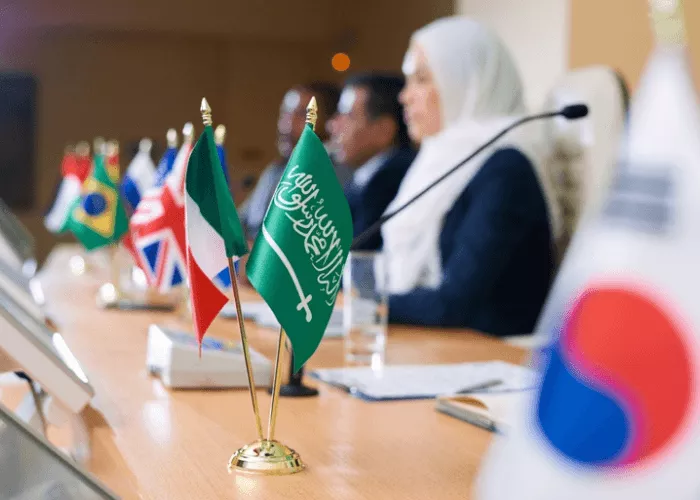
Saudi Arabia opened to international tourism in September 2019 with a new e-visa system. The country offers several types of visas for different purposes. Here is the detailed visa guide by country for travellers from each of the destinations we cover in this travel guide series.
Saudi Arabia Entry Requirements
Tourist Visa (General): Apply online at visitsaudi.com or through the Nusuk app. Citizens of 49 countries can receive a tourist visa on arrival or via e-visa. The tourist visa costs SAR 300 (~USD 80) and allows 90 days stay within 1 year, extendable once. Apply at: https://visa.visitsaudi.com
Hajj Visa: Required for all Muslim pilgrims performing Hajj. Applications must be made through officially recognised Hajj operators in your home country. The quota system limits the number of pilgrims from each country. Hajj visas are issued by the Saudi Ministry of Hajj and Umrah through authorised agents. More information: https://www.haj.gov.sa
Umrah Visa: Available year-round (except during Hajj season). Can be applied for through authorised Umrah operators or via the Nusuk app (https://nusuk.sa). The Nusuk app consolidates all Umrah visa, accommodation, and permit requirements. UK, US, Canadian, and Australian passport holders can include Umrah as part of a tourist visa.
Work Visa: Requires sponsorship from a Saudi employer (Kafala system). The employer initiates the process. Required documents include educational certificates, professional qualifications, medical clearance, and police clearance. Apply through the Saudi Ministry of Human Resources portal: https://hrsd.gov.sa
Business Visa: Available for business meetings, conferences, and trade visits. Requires an invitation from a Saudi company.
— Tourist places in Saudi Arabia
For Travellers from the UK
UK passport holders are eligible for the Saudi e-tourist visa online at https://visa.visitsaudi.com. Cost: SAR 300 (~GBP 65). Duration: 90 days within 1 year. Umrah can be combined with a tourist visa for UK holders. No separate Umrah visa is required. Work visas require employer sponsorship. Business visas available with company invitation. The UK maintains a travel advisory for Saudi Arabia – check https://www.gov.uk/foreign-travel-advice/saudi-arabia
For Travellers from Australia
Australian passport holders are eligible for the Saudi e-tourist visa at https://visa.visitsaudi.com. Same conditions apply as UK holders – 90 days within 1 year for SAR 300. Hajj and Umrah visas through authorised operators. Work visas through employer sponsorship. Check Smart Traveller: https://www.smartraveller.gov.au/destinations/middle-east/saudi-arabia
For Travellers from Canada
Canadian passport holders can apply for the Saudi tourist e-visa online. Cost SAR 300 (~CAD 110). Umrah included in tourist visa permissions. Hajj through authorised Canadian Hajj operators. Work visa through employer. Check Government of Canada travel advisory: https://travel.gc.ca/destinations/saudi-arabia
For Travellers from Spain
Spanish passport holders are eligible for Saudi tourist e-visa. Same 90-day terms and SAR 300 fee. Hajj and Umrah visas available through authorised Spanish operators. Check Spanish Ministry of Foreign Affairs guidance: https://www.exteriores.gob.es
For Travellers from South Korea
South Korean passport holders can apply for the Saudi e-tourist visa. Umrah included in tourist visa for Korean Muslims. Hajj through authorised Korean operators. Work and business visas through standard employer and invitation processes.
For Travellers from Switzerland
Swiss passport holders are eligible for the Saudi e-tourist visa. SAR 300 fee, 90 days within 1 year. Umrah included. Hajj through authorised Swiss operators. Work visa through employer sponsorship. Check Swiss FDFA travel advice: https://www.eda.admin.ch
For Travellers from South Africa
South African passport holders can apply for the Saudi e-tourist visa. Standard SAR 300 fee and 90-day conditions. Hajj through authorised South African Hajj boards. Umrah through authorised operators or Nusuk app. Work visa through employer. Check Department of International Relations: https://www.dirco.gov.za
For Travellers from Thailand
Thai passport holders are eligible for the Saudi e-tourist visa. Standard conditions apply. Hajj and Umrah through authorised Thai operators registered with the Saudi Ministry of Hajj. Work visa through employer sponsorship.
For Travellers from Pakistan
Pakistani passport holders require a tourist visa but are eligible to apply online. Hajj visa through official Pakistani Hajj quota managed by the Ministry of Religious Affairs. Umrah through authorised operators and via Nusuk app: https://nusuk.sa. Work visa through employer sponsorship. Note: Pakistan has a large worker population in Saudi Arabia with established processes for work visas through the Saudi embassies.
For Travellers from Portugal
Portuguese passport holders are eligible for Saudi tourist e-visa. Same 90-day, SAR 300 terms. Hajj and Umrah through authorised operators. Work and business visas through standard processes.
For Travellers from Germany
German passport holders can apply for Saudi tourist e-visa. Standard conditions. Hajj through authorised German operators. Work visa through employer. Check Auswaertiges Amt: https://www.auswaertiges-amt.de
For Travellers from France
French passport holders eligible for Saudi e-tourist visa. Standard conditions apply. Hajj through authorised French operators. Umrah included in tourist visa. Check Ministere des Affaires Etrangeres: https://www.diplomatie.gouv.fr
For Travellers from India
Indian passport holders can apply for the Saudi tourist e-visa. Standard SAR 300 fee and 90-day terms. Hajj visa through official Indian Hajj quota managed by Haj Committee of India: https://hajcommittee.gov.in. Umrah through authorised operators and Nusuk app. Work visa through employer – India has a very large worker population in Saudi Arabia with well-established processes.
For Travellers from the United States
US passport holders are eligible for the Saudi e-tourist visa at https://visa.visitsaudi.com. Standard conditions. Umrah included in tourist visa permissions. Hajj through authorised US operators. Work visa through employer sponsorship. Check US Department of State: https://travel.state.gov/content/travel/en/international-travel/International-Travel-Country-Information-Pages/SaudiArabia.html
For Travellers from the Netherlands
Dutch passport holders eligible for Saudi e-tourist visa at https://visa.visitsaudi.com. Standard conditions. Hajj through authorised Dutch operators. Work visa through employer. Check Rijksoverheid: https://www.rijksoverheid.nl
For Travellers from Malaysia
Malaysian passport holders can apply for Saudi e-tourist visa at https://visa.visitsaudi.com. Hajj through Tabung Haji Malaysia: https://www.tabunghaji.gov.my. Umrah through authorised operators. Standard work visa processes apply.
For Travellers from Hong Kong
Hong Kong SAR passport holders eligible for Saudi e-tourist visa. Standard conditions. Hajj and Umrah through authorised Hong Kong operators. Work visa through employer.
For Travellers from Italy
Italian passport holders eligible for Saudi e-tourist visa at https://visa.visitsaudi.com. Standard conditions. Hajj through authorised Italian operators. Work and business visas through standard processes.
For Travellers from Poland
Polish passport holders eligible for Saudi e-tourist visa at https://visa.visitsaudi.com. Standard conditions. Hajj through authorised Polish operators. Work visa through employer sponsorship.
For Travellers from Mexico
Mexican passport holders eligible for Saudi e-tourist visa at https://visa.visitsaudi.com. Standard SAR 300 fee and 90-day terms. Hajj and Umrah through authorised operators. Work visa through employer.
For Travellers from Croatia
Croatian passport holders eligible for Saudi e-tourist visa at https://visa.visitsaudi.com. Standard conditions. Hajj through authorised operators. Work visa through employer sponsorship.
For Travellers from Cuba
Cuban passport holders should check current eligibility at https://visa.visitsaudi.com as visa-on-arrival and e-visa availability varies. Contact the Saudi embassy for the most current information.
For Travellers from the Maldives
Maldivian passport holders eligible for Saudi e-tourist visa at https://visa.visitsaudi.com. Hajj through Ministry of Islamic Affairs Maldives. Umrah through authorised operators and Nusuk app.
For Travellers from Greece
Greek passport holders eligible for Saudi e-tourist visa at https://visa.visitsaudi.com. Standard conditions apply. Hajj through authorised Greek operators. Work and business visas through standard processes.
For Travellers from Egypt
Egyptian passport holders can apply for Saudi tourist e-visa at https://visa.visitsaudi.com. Hajj through Egyptian Ministry of Religious Affairs quota. Umrah through authorised operators and Nusuk app. Egypt has one of the largest Egyptian worker populations in Saudi Arabia.
Sign up to our newsletter and grab tickets at lowest prices
— Tourist places in Saudi Arabia
Frequently Asked Questions About Tourist Places in Saudi Arabia
Most visitors from eligible countries can obtain a tourist e-visa online at https://visa.visitsaudi.com for SAR 300, valid for 90 days within one year. Citizens of 49 countries are currently eligible. The visa can be obtained on arrival at major airports for eligible nationalities. Non-eligible nationalities should apply through the Saudi embassy in their home country. Umrah visa holders can also use their visa to visit many tourist places in Saudi Arabia. Always check the latest visa requirements through the official Visit Saudi website.
Yes, non-Muslims are welcome to visit most tourist places in Saudi Arabia including Riyadh, Jeddah, AlUla, Abha, Taif, Dammam, and all the natural and cultural attractions across the country. Non-Muslims are not permitted to enter the cities of Makkah and Madinah, which are restricted to Muslims only. Non-Muslim visitors should dress respectfully (shoulders and knees covered), particularly near mosques. Saudi Arabia has become significantly more open and welcoming to international tourism since 2019, and the tourist experience for non-Muslims is now genuinely excellent.
Saudi Arabia has relaxed its dress code requirements for tourists. Women are no longer required to wear the abaya (full-length robe) in public, though modest dress is expected - clothing that covers the shoulders and knees is appropriate. In religious sites like mosques and holy areas, more conservative dress is required: women should cover their hair, and both men and women should wear long sleeves and trousers or long skirts. Swimwear is acceptable at beaches, hotel pools, and water parks. Bringing a light scarf for mosque visits is recommended for women. Saudi people generally dress conservatively and visitors who do the same will receive a warm reception.
October to March is the best period for visiting most tourist places in Saudi Arabia. The weather is pleasantly mild (15-25°C in most regions) and outdoor activities, sightseeing, and coastal activities are all comfortable. The AlUla Winter at Tantora cultural festival (December to March) is the finest cultural event in the Saudi tourism calendar. Ramadan, which can fall in any season, provides an extraordinary cultural immersion opportunity for visitors who wish to experience Saudi culture at its most spiritually intense. Summer (June to September) has extreme heat in most areas but Abha and the Asir highlands (at 2,000+ metres) remain pleasant year-round.
Saudi Arabia is one of the safest tourist destinations in the Middle East. The country has extremely low crime rates, a strong police presence, excellent infrastructure, and a genuine culture of hospitality toward guests. Violent crime against tourists is virtually unknown. The main safety considerations are driving (road safety standards vary), sun and heat exposure in summer, and staying informed about developments in border areas near Yemen (the southern Jizan and Najran regions). The Saudi government has invested heavily in tourist safety infrastructure and takes the security of visitors very seriously. Women travelling solo consistently report positive experiences.
Hajj is the annual Islamic pilgrimage to Makkah and the surrounding holy sites, which is obligatory once in a lifetime for every Muslim who is physically and financially able. Hajj takes place over five days in the Islamic month of Dhul Hijjah (the 12th month of the Islamic lunar calendar) and involves a specific sequence of rituals including the Tawaf (circumambulation of the Kaaba), standing at Arafah, spending a night at Muzdalifah, stoning the pillars at Mina, and the sacrifice. Each country has an annual quota of Hajj pilgrims, and applications must be made through officially authorised Hajj operators in your home country well in advance (typically 6-12 months). More information: https://www.haj.gov.sa and https://nusuk.sa
Umrah is the lesser pilgrimage to Makkah, which can be performed at any time of year (outside of Hajj days) and is not obligatory but strongly recommended in Islam. Umrah involves Tawaf (circumambulation of the Kaaba), Sa'i (walking between Safa and Marwa), and the cutting of hair. The Nusuk app (https://nusuk.sa) has simplified Umrah planning enormously, allowing Muslims to book their Umrah visa, accommodation in Makkah and Madinah, and transportation all through a single platform. Many Muslims combine Umrah with visiting the tourist places in Saudi Arabia for a more comprehensive journey.
The currency of Saudi Arabia is the Saudi Riyal (SAR), which has been pegged to the US Dollar at approximately SAR 3.75 to USD 1.00 since 1986. Cash is still widely used, though credit and debit cards are accepted at hotels, major restaurants, and shopping centres. ATMs are abundant throughout Saudi cities and accept international Visa and Mastercard cards. Currency exchange is available at airports, banks, and licensed exchange offices. There is no tipping culture in Saudi Arabia, though it is appreciated for exceptional service.
Arabic is the official language of Saudi Arabia and the primary language of the country. Modern Standard Arabic is used in formal contexts, while Hejazi Arabic (around Makkah, Madinah, and Jeddah), Najdi Arabic (around Riyadh), and Gulf Arabic (in the Eastern Province) are the main regional dialects. English is widely spoken in hotels, tourist areas, airports, and by the educated professional class in major cities. Many signs in tourist areas are bilingual Arabic-English. Learning a few basic Arabic phrases - Assalamu Alaikum (peace be upon you), Shukran (thank you), and La ilaha illa Allah (the Islamic profession of faith) - will be warmly appreciated.
Non-Muslims are not permitted to enter Makkah at all. The city is entirely restricted to Muslims, and checkpoints on all roads into the city enforce this. Non-Muslims visiting Saudi Arabia can travel very close to Makkah but must respect the restriction. Madinah has a similar restriction specifically for the central area around Masjid Al Nabawi - the mosque and its immediate surroundings are restricted to Muslims. Non-Muslims can enter Madinah city itself and visit many areas of the city, but the sacred mosque precinct is not accessible to them. The Exhibition of the Two Holy Mosques in Makkah is open to all visitors and provides an excellent overview of both mosques.
The finest souvenirs from Saudi Arabia include: Oud incense and oud oil (Saudi Arabia produces some of the world's finest oud from Denal wood), attar perfumes (traditional concentrated rose and musk perfumes), saffron (Saudi saffron from Qassim is among the finest in the world), dates (particularly Medjool, Ajwa, and Sukkari varieties from Al Ahsa and Madinah), Najdi silver jewellery, Sadu-woven textiles (traditional Bedouin weaving), Arabic coffee sets (dallah pots and finjan cups), prayer beads (misbaha), and handwoven baskets from the Asir region. Zamzam water in sealed containers is available for purchase in Makkah and Madinah for Muslims to take home.
For Muslim first-time visitors: Masjid Al Haram in Makkah for prayer and Tawaf, Masjid Al Nabawi in Madinah for visiting the Prophet's mosque, Quba Mosque and Masjid Al Qiblatain, Masjid Miqat before ihram, Jabal Al Nour and Cave of Hira, and Mount Uhud. For general first-time visitors: AlUla and Hegra for the most spectacular archaeology in Saudi Arabia, Diriyah in Riyadh for Saudi historical heritage, Al Balad in Jeddah for traditional architecture, the Edge of the World near Riyadh for dramatic natural landscape, the Jeddah Corniche for waterfront atmosphere, and Abha for mountain scenery.
A first visit to Saudi Arabia that covers the main tourist places would ideally be 10-14 days: 2 days in Riyadh (Masmak, National Museum, Diriyah, Edge of the World), 1-2 days in Makkah and Madinah (for Muslim visitors), 2 days in Jeddah (Al Balad, Corniche, Floating Mosque), 2-3 days in AlUla (Hegra, Elephant Rock, Jubbah), 1-2 days in Abha (Asir Mountains), and 1 day in Taif. For non-Muslim visitors replacing Makkah and Madinah, the time can be redistributed to more days in AlUla and the Red Sea. Many visitors combine Saudi Arabia with other Gulf destinations using Jeddah and Riyadh as hubs.
Nusuk (https://nusuk.sa) is the official application of the Saudi Ministry of Hajj and Umrah, designed to centralise all services for Muslim visitors performing Umrah and Hajj. Through Nusuk, visitors can apply for their Umrah visa directly, book accommodation in Makkah and Madinah, book transportation, plan their itinerary, and request permits for visiting sites within the holy cities. The app has significantly simplified the Umrah experience for independent travellers and is available in multiple languages. The platform was introduced as part of Vision 2030's goal to serve 30 million Umrah pilgrims annually by 2030.
Saudi Arabia's tourist infrastructure has undergone rapid development since 2019 and now provides a genuinely excellent experience for most types of visitors. The major tourist places in Saudi Arabia (Riyadh, Jeddah, AlUla, Madinah, Makkah) have world-class hotels, good transport links, and professional tour operator services. The AlUla region has attracted extraordinary architectural and hospitality investment and now has some of the finest luxury eco-resorts in the Middle East. More remote areas such as the Farasan Islands, parts of the Empty Quarter, and the Asir highlands have more limited infrastructure but are being developed. The Saudi National Tourist Authority (NTA) website at https://www.visitsaudi.com has comprehensive, up-to-date information in English.
— Tourist places in Saudi Arabia
Conclusion | Tourist places in Saudi Arabia
Saudi Arabia offers an extraordinary diversity of spiritual enrichment, cultural discovery, and adventure experiences. From the sacred sites of Makkah and Madinah to the ancient wonders of AlUla, the Red Sea coastline, the Edge of the World, and the marvels of Riyadh, the Kingdom provides unforgettable journeys that blend traditional aspects with innovation as the hidden gems of Saudi Arabia.
There are facilities ranging from budget-friendly to luxury ones to make your tour memorable whenever you visit tourist places in Saudi Arabia. The Kingdom’s commitment to tourism development ensures that visitors enjoy world-class facilities, professional services that showcase the best of Arabian hospitality and culture. Plan a journey to come to Saudi Arabia’s sacred sites, hidden treasures, and desert adventures today.
A tour guide could be your safe zone for a safe trip to Saudi Arabia. Start planning your Saudi Arabian adventure by booking accommodations through Booking.com, securing guided tours through Viator and GetYourGuide, and exploring comprehensive travel packages through Zamzam.com and local operators. Whether you are drawn by spiritual calling, historical fascination, or the extraordinary natural landscapes, the tourist places in Saudi Arabia deliver experiences that will stay with you for a lifetime. For the most up-to-date travel information and visa requirements, visit Saudi Arabia official website.
In this website I have combined most of the places where I lived or visited during my international assignments, jobs I traveled to explore the world. Explore all our destination guides: Canada | United States | Mexico | United Kingdom | France | Italy | Spain | Germany | Croatia | Portugal | Netherlands | Switzerland | Poland | Greece | Thailand | China | Malaysia | India | South Korea | Hong Kong | Maldives | Australia | Turkey | Egypt | South Africa | Saudi Arabia | Cuba | Pakistan

Ghufran Khan
I’m a cybersecurity professional with 18+ years of IT experience, currently working in the Canadian government sector. Over the past 15 years, I’ve travelled to 37 countries, living and working in six of them. As a Level 4 My background in cybersecurity enables me to offer unique insights into travel safety and digital security. From the food streets of Lahore to the culinary scenes of Dubai, Mississauga, Turkey, and Italy, I believe the best way to experience any destination is through its food.