

Best place to go to Switzerland
Discover a country in Europe, enriched with natural wonders, beautiful landscapes, sky-high mountains, and turquoise water, where you can witness true beauty.
— Best place to go to Switzerland
Best places to visit in Switzerland
Have you ever heard of a paradise on this planet? A country named Switzerland serves you with an adventurous ride of beautiful landscapes, historic culture, old resorts, lush green forests, and modern sophistication. You will see a perfect blend of ancient traditions and contemporary architecture in Switzerland.
This country will take you to an ultimate guide of fantastic mountains, pristine lakes, and unique wildlife. What makes Switzerland different from all other countries of the world? The vast landscapes that cover the whole land of Switzerland are of extraordinary beauty and scenic views when you travel to Switzerland.
You can explore the legendary Glacier Express, snow-capped mountains, and old areas designated as UNESCO World Heritage Sites. There is a sustainable program that supports local communities while you travel to Switzerland. Switzerland is appropriate for all kinds of seasons.
You can enjoy summer wildflower hikes in the Swiss Alps, world-class skiing in winter, and cultural festivals for 365 days. Switzerland offers high-level entertainment along with scenic and breathtaking views of the country when you travel to Switzerland. UEFA Women’s EURO is hosting major tournaments in Switzerland in 2025.
Switzerland is a landlocked country at the heart of Europe, bordered by Germany to the north, Austria and Liechtenstein to the east, Italy to the south, and France to the west. Despite covering only 41,285 square kilometres – roughly the size of the Netherlands – it contains extraordinary geographic and cultural diversity. The Swiss Alps cover about 60 percent of the country’s area and contain some of the finest mountain scenery in the world. The Swiss Plateau between the Alps and the Jura Mountains is home to most of the population and the major cities. Switzerland has four official languages – German, French, Italian, and Romansh – and the cultural character of the country shifts dramatically as you travel from the German-speaking north to the French-speaking west to the Italian-speaking south in Ticino.
Switzerland consistently ranks among the most expensive countries in Europe, but this needs context. The country also consistently ranks among the highest in the world for quality of life, infrastructure, healthcare, safety, and natural beauty. The transport system is extraordinary – trains run to the minute, buses connect even the smallest mountain villages, and the Swiss Travel Pass gives unlimited access to virtually the entire network. The food is excellent, the cities are beautiful and clean, the mountains are among the finest on earth, and the standard of accommodation and service across the country is very high. Switzerland rewards visitors who plan carefully and budget realistically – it is not cheap, but it represents genuine value for what it delivers.
Deciding the best place to go to Switzerland depends entirely on what you are looking for. Interlaken and the Bernese Oberland give you the most dramatic alpine scenery and the classic Switzerland of postcards – the Eiger, the Jungfrau, Lauterbrunnen valley, and Grindelwald. Zermatt gives you the Matterhorn. Lucerne gives you the most beautiful small city in Switzerland with perfect lake and mountain views. Geneva and Lausanne give you sophisticated French-speaking lakeside cities with excellent food and culture. Zurich gives you world-class museums, the finest shopping, and the best food scene in the country. Ticino in the south gives you a Mediterranean Switzerland of palm trees, emerald rivers, and Italian culture. Each region is genuinely different and genuinely outstanding.



— Best place to go to Switzerland
Attractions in Switzerland Zurich
Attractions in Switzerland, Zurich are the most visited place. Switzerland is known for its beautiful landscapes, from the iconic Matterhorn towering above Zermatt to the crystal-clear waters of Lake Geneva reflecting the surrounding Alps. To get a scenic view of the mountains, you can visit the Jungfrau Region. Jungfraujoch ‘Top of Europe’ offers a track of 3,454 meters to get the sights of the majestic areas and vast landscapes.
Interlaken and the Bernese Oberland
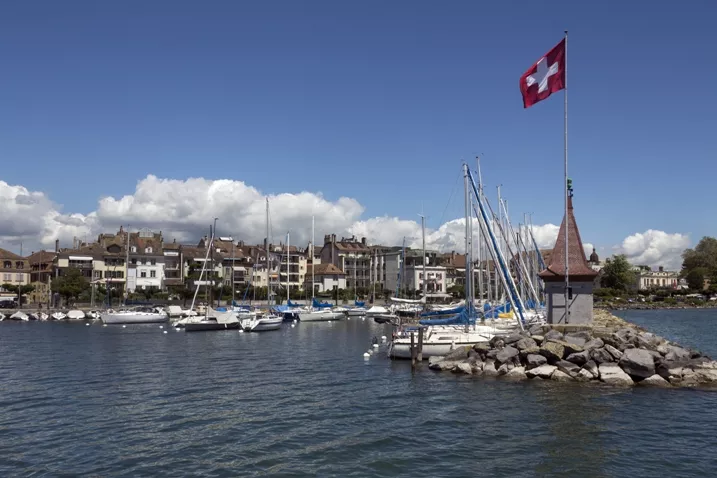
Interlaken is the most popular tourist destination in Switzerland and serves as the gateway to the Bernese Oberland, the most spectacular mountain region in the country. The town sits on the narrow plain between Lake Thun and Lake Brienz, surrounded by the towering north face of the Eiger, the Monch, and the Jungfrau forming a wall of rock and ice that dominates the southern horizon. Interlaken itself is a pleasant if heavily tourist-oriented town, but it is the surrounding villages and mountains that make this region the best place to go to Switzerland for most first-time visitors.
Lauterbrunnen valley, about 20 minutes by train from Interlaken, is one of the most dramatically beautiful places in Europe – a deep, sheer-sided glacial valley with 72 waterfalls including the famous Staubbach Falls cascading 300 metres directly off the valley walls. The villages of Wengen and Murren perch above the valley on terraces accessible only by cable car or mountain railway, with no road access, which keeps them beautifully quiet and car-free. Grindelwald at the base of the Eiger’s north face is the most developed of the mountain villages and offers direct access to the Jungfraujoch railway and the First cable car network. The Jungfraujoch, at 3,454 metres the highest railway station in Europe, gives access to the Aletsch Glacier, the longest glacier in the Alps, and views of extraordinary clarity on good days.
— Best place to go to Switzerland
Hotels in Interlaken and the Bernese Oberland
Budget: Balmer’s Hostel Interlaken (from CHF 40-80/night) is one of Switzerland’s most famous and well-run hostels, with an adventure booking desk and a lively social scene that has made it a backpacker institution. Victoria Jungfrau Adventure Hostel (from CHF 55/night) is another solid option in central Interlaken.
Mid-Range: Hotel du Lac Interlaken (from CHF 180/night) is a comfortable lakeside hotel with views of the Jungfrau from the terrace. Hotel Harder Kulm (from CHF 150/night) in Interlaken provides excellent access to the Harder Kulm funicular for panoramic views over the two lakes.
Luxury: Victoria-Jungfrau Grand Hotel and Spa (from CHF 500-900/night) is one of Switzerland’s most legendary grand hotels, a Belle Epoque palace in the centre of Interlaken with a full spa and direct views of the Jungfrau. Hotel Beausite Park (from CHF 350/night) in Wengen is an excellent upscale car-free mountain hotel. The best place to book a hotel is Booking.com, and to compare the rates, you can also visit Expedia.com
Swiss National Park
Swiss National Park offers a 174-kilometre path of pristine valleys, wildlife experience, and blue watery lakes located in the Engadin Valley. Strict conservation rules are applied to the locals and visitors who travel to Switzerland to preserve the ecosystem and wildlife. The Val Trupchun trail offers a suitable environment for wildlife, preserving the ecosystem of Switzerland.
The Swiss National Park in the canton of Graubunden is Switzerland’s only national park and one of the oldest in Europe, established in 1914. It covers about 170 square kilometres of high alpine terrain in the Lower Engadin valley near the border with Austria, and the strict no-interference policy that has been in place since its founding means the landscape has been allowed to return to its natural state over more than a century. Red deer, chamois, ibex, golden eagles, and bearded vultures are all present in numbers rarely seen elsewhere in the Alps. The park has no accommodation within its boundaries – visitors base themselves in the nearby village of Zernez or in St Moritz and walk in from the park boundaries. The Ova Spin and Il Fuorn routes are among the finest hiking trails.
Zermatt and the Matterhorn Viewpoint
Zermatt is termed the ‘Crown Jewel’ of the Swiss alpine region. It offers a 400+ kilometre marked hiking track. This track revolves around 38 four-thousand-meter trails of mountain peaks, offering stunning views of the high peaks, lush green forests, and vast landscapes.
The Five Lakes Walk offers a scenic view of the mountains during your trip to Switzerland. Gornergrat Railways offers a 3,100-metre track, allowing a panoramic view of the 29 towering peaks when you travel to Switzerland. A hiking trail in Zermatt is a must-do activity for tourists.
Zermatt is the most famous mountain village in Switzerland and one of the most celebrated alpine resorts in the world. It is car-free, accessible only by a narrow-gauge railway from the valley floor at Tasch, and the absence of combustion-engine vehicles gives the village an atmosphere of exceptional tranquility for such a popular destination. The Matterhorn – the 4,478-metre pyramid of rock and ice that dominates the skyline above the village – is quite possibly the most photographed mountain on earth. It is visible from many points in the village and from virtually every elevated position in the area, and the sight of it catching the first pink light of alpenglow at dawn is one of the finest views in the Alps.
Zermatt offers year-round skiing on the Klein Matterhorn glacier (Europe’s highest ski area at 3,883 metres), excellent summer hiking including the famous Five Lakes Walk past a series of mountain lakes each reflecting the Matterhorn, and a well-developed resort infrastructure with excellent restaurants and traditional mountain accommodation. The Hoernlihut, the base camp hut for attempts on the Matterhorn’s Hornli Ridge, is reachable by cable car and a short hike and gives non-climbers a sense of the mountain’s scale and grandeur. The Gorner Gorge through which the Gorner stream flows below the village is an excellent short walk
Hotels in Zermatt
Budget: Zermatt Youth Hostel (from CHF 92/night) has Matterhorn views from its terrace and is one of the most dramatically positioned youth hostels in Europe. Hotel Weisshorn (from CHF 120/night) is a clean, comfortable option close to the cable car stations.
Mid-Range: Hotel Antares (from CHF 200/night) is a well-located mid-range option with a good breakfast and easy access to the lifts. Mirabeau Hotel and Residence (from CHF 250/night) is a solid four-star property with a spa and excellent Matterhorn views from the south-facing rooms.
Luxury: Grand Hotel Zermatterhof (from CHF 600-1,200/night) is Zermatt’s grandest hotel, an imposing Belle Epoque building on the main pedestrian street with a full spa and some of the finest dining in the village. CERVO Mountain Resort (from CHF 500/night) is a design-led boutique luxury property with spectacular Matterhorn views.
— Best place to go to Switzerland
Travel to Switzerland and Explore Lake Geneva
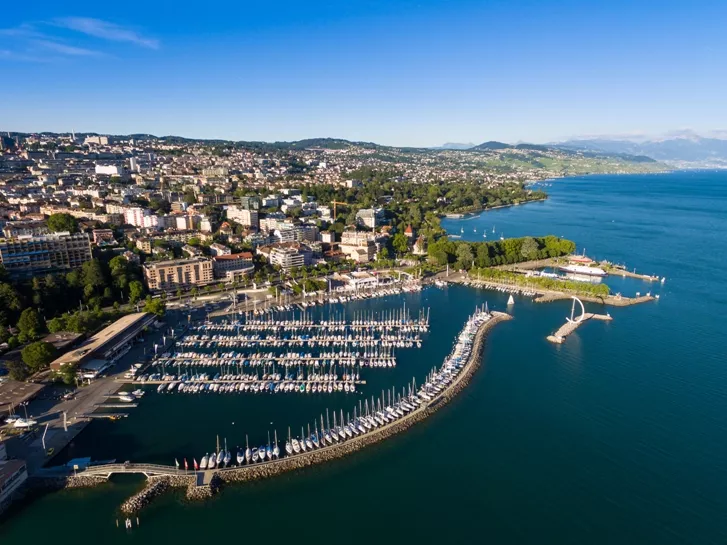
Lake Geneva’s elegant shoreline combines natural beauty with cultural sophistication. Chateau de Chillon, Switzerland’s most visited historic monument, sits majestically on the lake’s edge. The Lavaux Vineyards cascade down terraced hillsides in a UNESCO World Heritage landscape. At the same time, Belle Epoque steamboats that have operated for over 140 years provide romantic cruises connecting Montreux, Lausanne, and Geneva.
Lake Geneva (Lac Leman) is the largest lake in western Europe and one of the finest in the world for lakeside travel. The north shore from Geneva east through Lausanne, Montreux, and Villeneuve has an extraordinary combination of medieval castles, vineyard terraces, belle epoque resort hotels, and mountain scenery. The Lavaux vineyard terraces between Lausanne and Vevey, a UNESCO World Heritage Site, are among the most beautiful anywhere in the world – small stone-walled plots descending in neat steps from the hillside villages to the lake shore, producing excellent Chasselas white wines that are rarely exported and best drunk locally. The Chateau de Chillon at the eastern end of the lake, used as a prison for the Count of Savoy and immortalised by Byron’s poem, is the most visited historic monument in Switzerland.
— Best place to go to Switzerland
Ticino Region
The Ticino Region gives soul to the Mediterranean region, where the tall and long palm trees are located alongside the beautiful alpine peaks. Emerald pools located in Valle Verzasca provide ideal swimming spots when you travel to Switzerland. The spring and Autumn seasons are the best for the Italian-speaking canton to make your trip to Switzerland worthwhile.
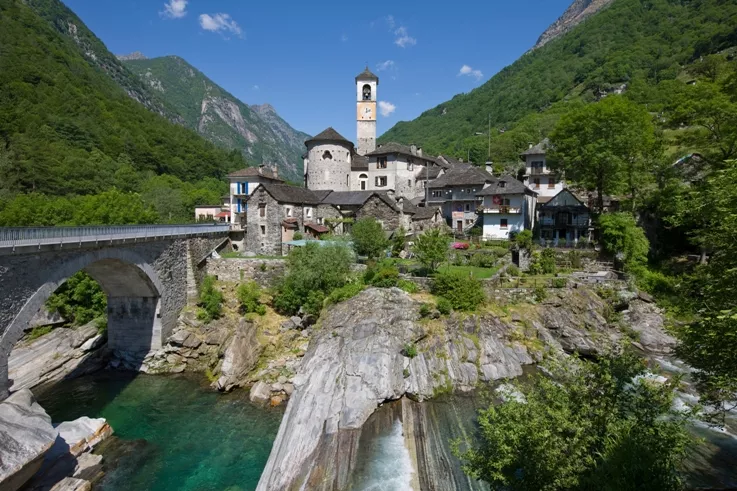
Ticino is Switzerland’s southernmost and most Italian region, and it feels genuinely different from the rest of the country. The language is Italian, the architecture is Mediterranean, the food is northern Italian in character, and the light is warmer and softer than in the German-speaking cantons. Lugano, the largest city, sits on a lake surrounded by wooded hills with a beautiful waterfront promenade, excellent restaurants, and easy access to the surrounding hills and valleys. Locarno on Lake Maggiore has a famous film festival each August and a beautiful old town. The Valle Verzasca with its clear turquoise water and stone bridges is one of the most photographed valleys in Switzerland.
Hotels in the Lake Geneva Region
Budget: Lausanne Youth Hostel (from CHF 50/night) is a well-run hostel with lake views and excellent access to the city’s attractions. Hotel de la Paix Lausanne (from CHF 90/night) is a simple, centrally located budget hotel close to the train station.
Mid-Range: Hotel Beau Rivage Palace Lausanne (from CHF 250/night) is a mid-range option with lake views in Ouchy on the waterfront. Hotel Angleterre and Residence Lausanne (from CHF 220/night) is a charming hotel right on the lakeside with a good restaurant.
Luxury: Beau-Rivage Palace Lausanne (from CHF 450/night) is one of the great grand palace hotels of Europe, a white neoclassical building directly on the Ouchy lakefront with exceptional service and views across to the French Alps. Montreux Palace (from CHF 400/night) is another magnificent Belle Epoque palace hotel with a long history of hosting writers and musicians including Nabokov, who lived there for the last years of his life.
— Best place to go to Switzerland
Train Routes During Travel to Switzerland
The train network of Switzerland is included in the world’s largest railway networks, providing a unique blend of breathtaking scenery with engineering marvels. Have you imagined travelling by train with panoramic views of the scenery? Switzerland takes you on a journey of railway tracks, alongside fantastic views of the beautiful landscapes and blue watery lakes.
Have you ever imagined travelling within a beautiful city with vast landscapes, iconic places to visit, sky-high mountains, and crystal-clear lakes? All these experiences are possible in your life when you travel to Switzerland. All you need is to book a ticket to fly to your dream place.
Switzerland has one of the most extraordinary railway networks in the world, not just for the technical achievement of threading railways through one of the most mountainous countries on earth, but for the quality of the views and experiences the trains provide. The Swiss Federal Railways (SBB) operates the mainline network connecting all major cities, while a web of mountain railways, cogwheel trains, funiculars, and cable cars gives access to the alpine regions. The main cities are connected by fast and frequent trains – Zurich to Bern takes about 55 minutes, Zurich to Geneva about 2 hours 40 minutes, Zurich to Lugano about 2 hours. But it is the scenic trains – the Glacier Express, Bernina Express, Golden Pass, and William Tell Express – that are the real highlights.
— Best place to go to Switzerland
Glacier Express
It is ranked among the world’s most spectacular train journeys. This express service has 291 bridges and 91 tunnels within eight hours, covering a track from Zermatt to St Moritz. Pricing for travelling in the Glacier Express is CHF 490 for Excellence Class in 2025.
This journey through the Glacier Express may include five-course meals and champagne service. Budget-conscious travellers can book seat reservations separately. These separate reservations are available within a price range of CHF 49, combined with Saver Day Passes starting at CHF 52.
The Glacier Express is the most famous scenic train in Switzerland and one of the most celebrated rail journeys in the world. The eight-hour route between Zermatt and St Moritz passes through 91 tunnels and over 291 bridges, climbing to a maximum altitude of 2,033 metres at the Oberalp Pass. The panoramic windows of the modern coaches give unobstructed views of the entire route, which passes through the Rhone Valley vineyards, the dramatic Surselva gorge, and the high alpine plateau of the Engadin. The train moves slowly enough – despite being called an express, it averages only 35 kilometres per hour – to take in all the scenery without feeling rushed. The dining car serves Swiss specialities throughout the journey and the lunch service is a highlight.
Bernina Express
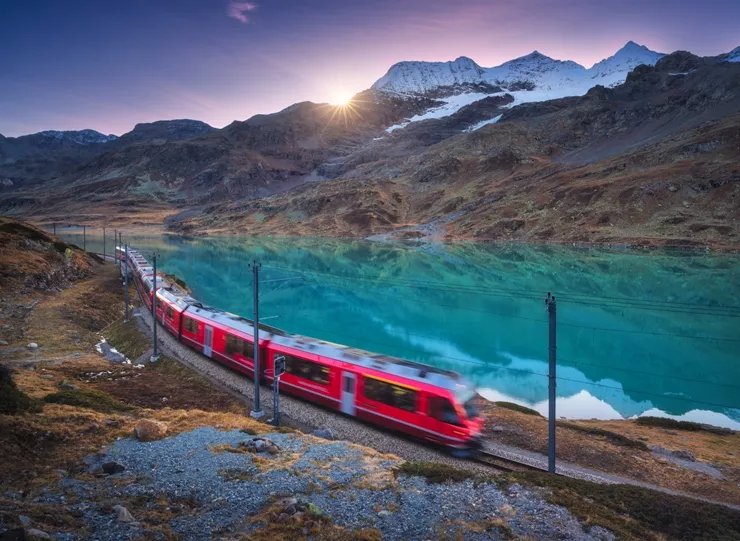
The Rhaetian Railway network, certified by UNESCO World Heritage, is the path followed by the Bernina Express, climbing 2,253 metres without using rack-and-pinion technology. The summer season in Switzerland runs from May to October. The winter season operates with a single train route.
The Landwasser Viaduct includes a route that is 65 meters above the valley floor. The Brusio Circular Viaduct creates a perfect 360-degree spiral. These are, no doubt, exceptional railway journey tracks that you could experience when you come to Switzerland.
The Bernina Express is operated by the Rhaetian Railway on a route that is jointly a UNESCO World Heritage Site with the Albula Line to its north, and it is a genuinely extraordinary piece of engineering. Running from Chur or Davos through St Moritz and over the Bernina Pass at 2,253 metres to Tirano in Italy, the route covers some of the most dramatic mountain scenery in the Alps. The line achieves its altitude without rack-and-pinion technology – an achievement that required extraordinary feats of engineering including the Brusio spiral viaduct, where the railway makes a complete 360-degree loop to lose altitude gradually. The contrast between the snow-covered high Alps around the Bernina Pass and the palm trees of Tirano at the Italian end of the route within a single journey is remarkable.
Cogwheel Railway
Funiculars and the Cogwheel Railways provide access to the most scenic views of Switzerland. If you want to reach Europe’s highest train station, you have to travel through the Jungfrau Railway. This track will take you on a ride of 3,454 metres above sea level when you travel to Switzerland.
If you want to travel the world’s steepest railway track, Mount Pilatus provides a path with revolving cable cars. The Golden Round Trip from Lucerne serves a track with beautiful landscapes, and the Cogwheel Railways sightseeing. This unique path offers a price range of CHF 115.80, taking you on a day-long adventurous ride when you travel to Switzerland.
The Golden Pass panoramic railway line is a different kind of scenic journey – not a single train but a series of connecting services running from Montreux on Lake Geneva through Gstaad and the Simmental valley to Interlaken and then on to Lucerne. The route passes through some of Switzerland’s most beautiful and varied countryside, from the vineyard terraces of Lake Geneva through the rolling green hills of the Bernese Oberland to the mountain scenery around Interlaken. The Golden Pass Express, introduced in 2022, now connects Montreux directly to Interlaken in a single panoramic train with tilting bogies that allow the service to run through sections of the route previously requiring a change of train. The William Tell Express connects Lucerne by boat to Fluelen at the end of Lake Lucerne and then by train through the Gotthard base to Lugano in Ticino.
Swiss Travel Pass
Have you heard about a travel pass that gives you a discount on travel items? Some travellers in Switzerland hold a Swiss Travel Pass with a maximum value, and travel throughout the country, which accommodates prices of 2025. Youth discounts of 30% benefit travellers under 25, while the Swiss Family Card allows children 6-15 to travel free with parents.
The Swiss Travel Pass is one of the best value travel passes available anywhere in Europe and is almost essential for visitors who are travelling through the country and want to use trains, buses, boats, and mountain railways extensively. The pass gives unlimited use of the entire Swiss Federal Railways network, all PostBus routes, and many lake steamers, as well as free entry or discounts at over 500 museums and free or reduced admission to many mountain railways and cable cars including the Schynige Platte, Murren and Wengen railways, and the Rigi railways. The pass is available in consecutive-day versions (3, 4, 6, 8, or 15 days) and is sold exclusively outside Switzerland. The 2025 adult price for a 3-day consecutive pass starts at around CHF 244. For a visitor spending 7-10 days in Switzerland and moving between multiple regions, the pass typically pays for itself very quickly.

— Best place to go to Switzerland
Urban Culture and Lifestyle in Switzerland
If you travel to Switzerland, you’ll find not only green fields and beautiful mountains, but the country has also made progress in urbanization. The cities are serving a perfect blend of cultural aspects along with modern technologies. You can explore the perfect mix when you travel to Switzerland.
The blend of natural beauty and urbanization is always the best. Modern sophistication with a mixture of historic and ancient remnants gives a perfect panorama to live and enjoy. This is possible only in some regions of the world, including Switzerland, which is like a heaven on Earth, offering breathtaking views.
Zurich
The largest city of Switzerland is Zurich, which offers world-class art in the form of Kunsthaus Zurich. This serves as a housing work by Picasso and Giacometti alongside exceptional masterpieces. The Bahnhofstrasse ranks among the world’s most exclusive shopping streets.
The Uetliberg local mountain provides panoramic city and alpine views. Lake Zurich offers urban beach experiences and regular boat cruises connecting charming lakeside villages. A tour to the countryside of Switzerland is, no doubt, a fantastic experience for international visitors.
Zurich is Switzerland’s largest and most cosmopolitan city, and it consistently ranks among the world’s most liveable cities. The medieval old town (Altstadt) on both banks of the Limmat river has the finest concentration of historic buildings and churches in Switzerland, including the twin-towered Grossmunster and the Fraumunster with its famous Marc Chagall stained glass windows. The Kunsthaus Zurich completed a major extension in 2021 that made it the largest art museum in Switzerland, with outstanding collections of Swiss art, Impressionism, and contemporary work. The Bahnhofstrasse is genuinely one of the world’s great shopping streets, but the parallel streets of the Zurich West neighbourhood and the Langstrasse are where the city’s more independent and interesting food, design, and nightlife scene is concentrated.
— Best place to go to Switzerland
Hotels in Zurich
Budget: City Backpacker Hostel Zurich (from CHF 40-60/night) is a well-located budget option in the old town near the Grossmunster. Youth Hostel Zurich (from CHF 50/night) is the city’s official HI hostel near the Zurich West neighbourhood.
Mid-Range: Hotel Adler Zurich (from CHF 180/night) is a charming boutique hotel in the old town with well-designed rooms and a good central location. Hotel Helvetia (from CHF 160/night) is another good mid-range option in Zurich West close to the vibrant food and bar scene.
Luxury: The Dolder Grand (from CHF 450-800/night) is Zurich’s most famous luxury hotel, a turretted Belle Epoque fantasy on a wooded hill overlooking the city and lake with a world-class spa. Zurich Marriott Hotel (from CHF 350/night) on the Limmat river is a reliable modern luxury option with excellent city views.
Geneva
Geneva is a part of the United Nations’ European headquarters. The CERN Science Gateway opens a new path for exhibitions in 2025, including the breathtaking ‘Quantum Karaoke’ experience. Geneva’s Jet d’Eau fountain, visible from an altitude of 10 kilometres, displays the dynamic character of the city, while the Old Town’s cobblestone streets showcase the historical aspects of Switzerland.
Geneva is one of the most international cities in the world, home to over 30 international organisations including the UN’s European headquarters, the Red Cross, and the World Health Organisation, and roughly 40 percent of its population is foreign-born. It sits at the western tip of Lake Geneva where the Rhone exits the lake, and the city has a beautiful lakeside setting with the famous Jet d’Eau water fountain shooting 140 metres into the air and the Alps visible to the south on clear days. The Old Town on the hilltop above the lake has the Cathedral of Saint-Pierre where John Calvin preached, the Maison Tavel (Geneva’s oldest house), and excellent views over the lake and the fountain. The Paquis neighbourhood by the lake has the most diverse and interesting restaurants in the city, with dozens of nationalities represented.
Hotels in Geneva
Budget: City Hostel Geneva (from CHF 40/night) near the train station is a clean, well-run budget option. Hotel de la Cloche (from CHF 80/night) in the old town area is a simple hotel with a good location and reasonable prices by Geneva standards.
Mid-Range: Hotel Bel Espoir Geneva (from CHF 150/night) is a comfortable mid-range option with easy access to the lake and old town. Hotel Auteuil (from CHF 200/night) near the train station is a well-maintained four-star hotel with good service.
Luxury: Four Seasons Hotel des Bergues Geneva (from CHF 600/night) is Geneva’s most prestigious address, a historic grand hotel on the Rhone river with exceptional service and views. Beau-Rivage Geneva (from CHF 500/night) is another magnificent grand hotel directly on the lakefront, one of the most established luxury hotels in Switzerland.
Bern
Bern is a UNESCO World Heritage Site. It represents the six kilometres of green arcade, and the architectural marvels are at its extreme. The Zytglogge Clock Tower represents a mechanical puppet show of an hour after 800 years of artwork.
Also, there is the Einstein House that displays the residence of the great scientist from 1903 to 1905. The Bear Park is ready to showcase the modern habitat of the city, exploring hidden gems when you travel to Switzerland. Switzerland’s natural art will amuse you in all ways, like the natural yet sophisticated parks.
Bern is Switzerland’s federal capital and one of the best-preserved medieval cities in Europe. The entire old town, built on a peninsula in a bend of the Aare river, is a UNESCO World Heritage Site and is remarkable for its uniformity – the sandstone arcaded buildings were rebuilt to a consistent design after a fire in 1405, giving the old town its distinctive character. The six kilometres of arcaded walkways (Lauben) are one of the longest covered pedestrian zones in the world and give the city a uniquely comfortable quality for walking in all weathers. The Rose Garden above the old town, the Rosengarten, gives panoramic views over the river, the old town’s red rooftops, and the Alps on clear days. Bern is less visited than Zurich or Lucerne but rewards a day or two of relaxed exploration, particularly for those interested in history and architecture.
Hotels in Bern
Budget: Bern Backpackers Hostel (from CHF 35/night) near the train station is a clean, central budget option. Hotel National Bern (from CHF 90/night) is a simple but well-located hotel close to the main train station.
Mid-Range: Hotel Allegro Bern (from CHF 180/night) is a modern design hotel with excellent views over the city and easy access to the train station. Hotel Savoy Bern (from CHF 160/night) is a comfortable mid-range option in a good central location.
Luxury: Bellevue Palace Bern (from CHF 400/night) is Bern’s grandest hotel, a neo-baroque palace on the cliff above the Aare river with exceptional views and an important history as the main hotel for visiting heads of state and dignitaries. Hotel Schweizerhof Bern (from CHF 350/night) is another fine luxury option close to the train station with a long history and excellent service.
Basel
Do you know which is the cultural capital of Switzerland? Basel is termed the ‘Cultural Capital’ of Switzerland. It accommodates 40 museums, including the Kunstmuseum Basel, serving the world’s oldest public art collection. The Fondation Beyeler attracts international visitors with impressionist and contemporary masterpieces.
Art Basel (June 19-22, 2025) draws global collectors to the world’s premier art fair. Basel’s location at the intersection of Switzerland, France, and Germany creates unique multicultural dining and cultural experiences. Its location holds a central point in the fame of this iconic region of Switzerland.
Basel is the cultural powerhouse of Switzerland and has more museums per capita than any other city in the world. The Kunstmuseum, the Kunsthalle, the Fondation Beyeler in nearby Riehen, the Vitra Design Museum across the border in Germany, and dozens of smaller galleries and museums give Basel an art density that is extraordinary for a city of 180,000 people. The Rhine riverfront is the liveliest public space in the city – locals swim in the Rhine in summer, carried downstream by the current and retrieved by ferry, in a tradition unique to Basel. The Fasnacht carnival in February is one of Switzerland’s most important cultural events, a three-day masked carnival that begins at precisely 4am on the Monday after Ash Wednesday.
Hotels in Basel
Budget: Youth Hostel Basel (from CHF 45/night) is a well-located HI hostel near the train station. Hotel Stadthof Basel (from CHF 80/night) is a simple, clean hotel in the old town area.
Mid-Range: Hotel Krafft Basel (from CHF 160/night) is a beautifully positioned mid-range hotel directly on the Rhine with excellent river views. Hotel Basel (from CHF 150/night) is a centrally located option near the Kunstmuseum with good amenities.
Luxury: Grand Hotel Les Trois Rois (from CHF 400/night) is Basel’s most prestigious hotel, a historic grand hotel on the Rhine with exceptional views and one of the finest restaurants in the city. Hotel Euler Basel (from CHF 300/night) near the train station is an elegant traditional hotel with a long history.
Lucerne
Lucerne is one of the most beautiful cities in Switzerland and one of the most visited in the country, combining a perfectly preserved medieval old town, a magnificent lakeside setting, and easy access to Mount Pilatus and Mount Rigi with some of the best mountain views in Switzerland from a city. The Chapel Bridge (Kapellbrucke), the wooden covered footbridge with its painted gable panels crossing the Reuss river near the lake, is the most photographed landmark in Switzerland and one of the most recognisable in all of Europe. The Lion Monument, a dying lion carved into a limestone cliff near the old town, was described by Mark Twain as the most moving piece of stone in the world and remains one of Switzerland’s most poignant memorials.
The Old Town of Lucerne on the north bank of the Reuss is a remarkably well-preserved medieval townscape of painted facades, flower-draped window boxes, and narrow lanes. The town walls and watchtowers survive almost completely. The Swiss Museum of Transport (Verkehrshaus) on the lake to the east is the most visited museum in Switzerland, with an extraordinary collection of trains, planes, cars, ships, and space vehicles. The Rosengart Collection in the city centre has an outstanding holding of Picasso and Klee. Day trips from Lucerne are outstanding: the Golden Round Trip taking the boat to Alpnachstad, cogwheel train to Pilatus, cable car down to Kriens, and bus back to Lucerne is one of the finest day excursions in Switzerland.
Hotels in Lucerne
Lucerne is one of the most beautiful cities in Switzerland and one of the most visited in the country, combining a perfectly preserved medieval old town, a magnificent lakeside setting, and easy access to Mount Pilatus and Mount Rigi with some of the best mountain views in Switzerland from a city. The Chapel Bridge (Kapellbrucke), the wooden covered footbridge with its painted gable panels crossing the Reuss river near the lake, is the most photographed landmark in Switzerland and one of the most recognisable in all of Europe. The Lion Monument, a dying lion carved into a limestone cliff near the old town, was described by Mark Twain as the most moving piece of stone in the world and remains one of Switzerland’s most poignant memorials.
The Old Town of Lucerne on the north bank of the Reuss is a remarkably well-preserved medieval townscape of painted facades, flower-draped window boxes, and narrow lanes. The town walls and watchtowers survive almost completely. The Swiss Museum of Transport (Verkehrshaus) on the lake to the east is the most visited museum in Switzerland, with an extraordinary collection of trains, planes, cars, ships, and space vehicles. The Rosengart Collection in the city centre has an outstanding holding of Picasso and Klee. Day trips from Lucerne are outstanding: the Golden Round Trip taking the boat to Alpnachstad, cogwheel train to Pilatus, cable car down to Kriens, and bus back to Lucerne is one of the finest day excursions in Switzerland.
Hotels in Lausanne
Budget: Lausanne Youth Hostel (from CHF 45/night) on the lakeside near Ouchy is one of Switzerland’s most beautifully situated hostels. Hotel du Marche Lausanne (from CHF 90/night) in the old town is a good budget option in the heart of the city.
Mid-Range: Hotel Alpha Palmiers Lausanne (from CHF 160/night) is a comfortable mid-range hotel with an indoor pool and central location. Hotel La Croix d’Ouchy (from CHF 180/night) is a pleasant option right on the Ouchy lakefront.
Luxury: Beau-Rivage Palace Lausanne (from CHF 450/night) is the grandest hotel in Lausanne, a neoclassical palace directly on the lake with extraordinary views of the French Alps and exceptional service. Hotel de la Paix Lausanne (from CHF 350/night) is a fine historic hotel in the city centre.
— Best place to go to Switzerland
Top Things to Do in Switzerland
If you travel to Switzerland, you will crave some unique experiences in the country. Taking in the panoramic mountain views, lush green fields, beautiful landscapes, and railway tracks of Switzerland is a common perspective for tourism. There are some unique and entertaining things to do in Switzerland that will make your tour to Switzerland memorable.
Lindt Home of Chocolate
The chocolate heritage of Switzerland offers an experience far beyond the normal ones. The world’s tallest chocolate fountain is the Lindt Home of Chocolate in Kilchberg, which is nine meters tall. Maison Cailler provides a tour to Switzerland’s oldest chocolate brand, while Geneva’s Chocolate Flavours Tour is ranked as the country’s number one chocolate experience, with 13 award-winning ceremonies.
Switzerland’s chocolate culture is one of the most distinctive and enjoyable aspects of visiting the country. The country has been producing some of the world’s finest chocolate since the 19th century, when Swiss chocolatiers pioneered the techniques of milk chocolate (Daniel Peter and Henri Nestle in Vevey in the 1870s) and conching (Rodolphe Lindt in Bern in 1879). The Cailler chocolate factory and museum in Broc near Gruyeres is the best chocolate factory tour in Switzerland, combining the history of Swiss chocolate with impressive tasting sessions. Zurich’s Sprungli confectionery on the Bahnhofstrasse, famous for its Luxemburgerli macarons and handmade chocolate truffles, is one of the finest chocolate shops in the world.
— Best place to go to Switzerland
Patek Philippe Museum
The Patek Philippe Museum in Geneva houses almost 2,500 timepieces that are five centuries old. Several watchmaking workshops offer techniques that are next-level to watch and see the handmade crafts when you travel to Switzerland. If you are on a factory tour, you will get updates about the behind-the-scenes marvels in Swiss watchmaking areas.
Switzerland’s watchmaking industry is one of the most prestigious in the world, centred on the Jura region and the Vallée de Joux west of Lausanne. The town of La Chaux-de-Fonds in the canton of Neuchatel, jointly a UNESCO World Heritage Site with Le Locle for its grid-plan watchmaking city design, is the heart of the industry. The International Watchmaking Museum in La Chaux-de-Fonds has an outstanding collection tracing the development of precision timekeeping from early mechanical clocks to modern haute horlogerie. The Audemars Piguet Museum in Le Brassus in the Vallée de Joux is housed in a spectacular building designed by BIG architects and gives access to one of the finest collections of historical and contemporary watchmaking.
Christmas Markets in Switzerland
You could explore the cities of Switzerland between November and December, similar to winter wonderlands during the Christmas season. Basel’s Christmas Market ranks as Switzerland’s most significant market, featuring 150 wooden chalets. Montreux’s lakeside setting is a magical drop, providing a scenic view of the lake along with mountains in the Christmas season when you travel to Switzerland.
Switzerland’s Christmas markets are among the finest in Europe and significantly less crowded than the markets of Germany and Austria for most of the season. Zurich’s market in the Hauptbahnhof (the main railway station) is a visual spectacle of lights and decorations in the grand Victorian space, and the outdoor market in the Niederdorf old town runs alongside it. Bern’s market in Munsterplatz under the Cathedral and in the arcaded streets of the old town is the most beautiful setting. Lucerne’s market in the old town streets has excellent local food and craft products. Basel’s market, the oldest and largest in Switzerland, fills the main squares of the old town with traditional wooden stalls and is best visited on a weekday before the weekend crowds arrive.
Traditional Resorts
Mountain chalets based on traditional levels and spa facilities will make your stay in Switzerland memorable and your trip to Switzerland exceptional. CERVO Mountain Resort in Zermatt provides luxury facilities, while the Grand Resort Bad Ragaz offers hot water thermals and wellness treatments.
Also, the Dolder Grand, located in Zurich, provides spa experiences in the city. Here you can enjoy panoramic views of the sky-high mountains. You could explore these natural sites and traditional activities only if you travel to Switzerland.
Paragliding in Switzerland
If you want to experience paragliding when you travel to Switzerland, there are thrilling aerial views of the iconic places, including Lakes Thun and Brienzersee. There are professional pilots with you during paragliding. They will guide you throughout the 15 to 20-minute flight.
You can enjoy these paragliding experiences within a price range of CHF 5 million liability insurance and an actual price of CHF 165-195. The journey includes transportation to Beatenberg’s takeoff site and landing in Interlaken’s city centre within walking distance of hotels. Ready to take a paragliding flight in Switzerland?
— Best place to go to Switzerland
Hiking in Switzerland
Hiking is one of the best things to do in Switzerland, and the country has developed its trail network to an extraordinary standard. Switzerland has over 65,000 kilometres of marked walking trails, colour-coded by difficulty and maintained to a consistently high standard. The best place to go to Switzerland for hiking depends on your experience level and preference – the Bernese Oberland around Interlaken and Grindelwald has the most dramatic scenery and the most famous routes including the Eiger Trail along the base of the north face and the Panorama Way between Murren and Gimmelwald. Zermatt offers the Five Lakes Walk and the Gorner Gorge. The Appenzell region in eastern Switzerland has excellent hill walking through a gentler, greener landscape. The Via Alpina long-distance trail crosses Switzerland from east to west over eight stages, taking in the finest mountain scenery in the country.
Skiing in Switzerland
Switzerland has some of the finest ski resorts in the world, with excellent snow records, well-maintained pistes, and a standard of resort infrastructure that sets the benchmark globally. Verbier in the Valais, connected to the massive Four Valleys ski area, is one of the most prestigious and challenging ski resorts in Europe. St Moritz in the Engadin, the original Alpine ski resort, is the most glamorous and has hosted the Winter Olympics twice. Zermatt, with access to over 360 kilometres of pistes and the highest ski area in the Alps at 3,883 metres on the Klein Matterhorn, is the most complete ski destination. Wengen and Murren in the Bernese Oberland, both car-free villages accessible only by mountain railway or cable car, are smaller and more traditional resorts with excellent skiing and a quality of mountain atmosphere that the larger resorts cannot match. Saas Fee in the upper Saas Valley is another outstanding option, car-free and with a reliable year-round glacier ski area.
— Best place to go to Switzerland
Travel Guide to Switzerland
If you are thinking of travelling to Switzerland, there are some tips and ideas to guide you properly. The tips will be about the accommodation, dining services, best cuisines, and the best places to visit when you come to Switzerland. They will be helpful in terms of both time and money, and making your tour to Switzerland remarkable.
Accommodation
Accommodation options span every budget category, with 2025 pricing reflecting excellent value across all segments. Budget travellers find quality hostels and hotels from CHF 60-150 per night. This package may include breakfast, lunch, a comfortable stay and often city tourist cards.
Mid-range properties can stay within a price range of CHF 150-300, which offer 3-4 star amenities in central locations. Luxury accommodations within a price range of CHF 350-800+ provide full-service spas and Michelin-starred dining experiences, along with advanced amenities. Ready to book your ticket with Booking.com?
Zermatt offers everything from the Zermatt Youth Hostel, charging CHF 92 per night with Matterhorn views, to ultra-luxury properties like Grand Hotel Zermatterhof, charging CHF 600-1,200+. Interlaken caters to families with Balmer’s Hostel within a price range of CHF 40-80, featuring adventure booking desks. The Grand Hotel Beau Rivage, charging CHF 400-600, offers historic luxury with river views.
Food and Dining in Switzerland
Food costs vary significantly by dining choice, with budget options from CHF 12-20, including kebabs, fast food, and grocery meals. Mid-range restaurants charge CHF 25-50 and serve traditional Swiss specialities like fondue and raclette, while fine dining charges CHF 70-150+ and showcases Michelin-starred culinary excellence. Savvy travellers shop at Coop and Migros supermarkets for substantial savings on meals.
Swiss cuisine is more varied and distinctive than its reputation outside the country suggests. Fondue – melted cheese served in a communal pot with bread for dipping, the correct cheeses being Gruyere and Vacherin Fribourgeois mixed with white wine and garlic – is the quintessential Swiss dish and genuinely excellent in the right setting, particularly at a mountain restaurant in winter. Raclette, melted cheese scraped onto potatoes with pickled onions and gherkins, is equally good. Rosti, the Swiss potato cake, appears as an accompaniment to almost everything. Zopf, the braided white bread loaf served on Sundays throughout German-speaking Switzerland, is one of the finest breads in Europe. Regional specialities include the Bernese Platte (a selection of boiled and cured meats with vegetables), Capuns in Graubunden (dried meat rolled in chard leaves), and the risotto and polenta dishes of Ticino.
Transportation in Switzerland
You can travel to Switzerland by flight, but what about travelling within the country? The Swiss Travel Pass will help you travel through the country. Switzerland is home to engineering marvels, including railway tracks, along with panoramic views of the sky-high mountains and the beautiful landscapes that will make your trip to Switzerland remarkable.
The PostBus network complements the railway system by connecting villages and mountain areas that the trains do not reach. The distinctive yellow PostBuses run to a reliable schedule and are integrated with the rail timetable, making it possible to travel from major cities to remote valleys by a combination of train and bus with good connections. The Swiss Travel Pass covers all PostBus routes as well as trains, making it genuinely possible to travel anywhere in the country without a car. Renting a car is the most flexible option for exploring the smaller valleys and rural areas of Switzerland, but roads are typically well-maintained and signed, and driving in the mountains, while occasionally dramatic, is generally well-managed with good tunnel alternatives for the highest passes.
Best Time to Visit Switzerland
If you travel to Switzerland to enjoy the summer vacations, June to August is the best time to enjoy all the hiking tracks and wildflower meadows at peak beauty. Lake activities may include swimming, waterfront dining, and boating. Festival season peaks with the Montreux Jazz Festival from July 4-19, and UEFA Women’s EURO 2025 starting from July 2 to July 27.
Winter sports may start from December to March and provide a beautiful experience of snow sports, transforming the country into a wonderland, especially places like Zermatt, St Moritz, and Verbier. These areas provide an opportunity for world-class skiing when you travel to Switzerland. The Christmas season arrives within these winter months, transforming the country into a dream with a Christmas Market.
The spring season, between April and May, brings wildflower blooms. The Cow Festival is ready to celebrate the alpine culture. Autumn comes between September and October, leading to autumn foliage and harvesting celebrations, making your trip to Switzerland a remarkable one, with affordable accommodation prices.
The shoulder seasons of May, June, September, and October are often the best compromise for visitors who want good weather, manageable crowds, and reasonable prices. May and June bring the spring wildflower season to the alpine meadows, which at its peak in late June with the Alpenrosen (alpine roses) in bloom is one of the most beautiful sights in Switzerland. September is the month of the Alpabfahrt – the descent of the cattle from the high summer pastures back to the valleys, celebrated with decorated cows and traditional music in villages throughout the Alps. The Montreux Jazz Festival in July and the Lucerne Festival classical music festival in August are both major events that draw visitors from around the world.
Sign up to our newsletter and grab tickets at lowest prices
— Best place to go to Switzerland
FAQ - Best place to go to Switzerland
If you travel to Switzerland, a Swiss Travel Pass is the best way to save time and money. You can travel throughout the country by using that specific pass. Prices may vary from time to time, so you have to check the current situation.
Switzerland ranks among Europe's expensive destinations, but strategic planning makes it accessible. Budget travellers can manage within a price range of CHF 80-120 daily using hostels and grocery shopping, while mid-range experiences cost CHF 150-300 daily. The Swiss Travel Pass provides significant savings, and shoulder season travel reduces costs substantially.
If you are planning to travel to Switzerland, you will need to plan for 7 to 10 days for a comprehensive tour to explore the major cities, vast landmarks, and railway services. Almost 14 days are required for extensive tourism in Switzerland, along with a travel guide to visit the best places in the country.
No, US, UK, and EU citizens can enjoy visa-free trip to Switzerland. However, tourists and visitors from other countries need a visa to travel to Switzerland. All you need to do is check the current visa policy of the country for 2026.
If you are travelling to Switzerland for the first time, you should visit Zurich to explore the urban sophistication and modern world. Lucerne is best for historic charm and ancient civilization. Jungfrau Region will lead to a new world of railways, while Zermatt delivers iconic Matterhorn experiences for you, and makes your trip to Switzerland remarkable.
The best place to go to Switzerland for families depends on the ages of the children. Interlaken and the Bernese Oberland is the most family-friendly region overall - the mountain railways and cable cars to Jungfraujoch, Grindelwald First, and Harder Kulm are exciting for children of all ages, and the adventure activities including paragliding, canyoning, and mountain biking are excellent for teenagers. Lucerne is excellent for families with the Swiss Museum of Transport (the best children's museum in Switzerland), boat trips on the lake, and the Glacier Garden. Zurich has the excellent Zurich Zoo and the Swiss National Museum. The Zurich Toy Museum and the various hands-on science museums in Basel and Lucerne are all outstanding for children.
Switzerland is consistently one of the safest countries in the world for visitors. Crime rates are low, the emergency services are efficient and responsive, the transport system is reliable and secure, and the country has a tradition of political neutrality that makes it stable and welcoming to visitors from all backgrounds. Basic sensible precautions - securing valuables, being aware of your surroundings in crowds, checking conditions before mountain activities - are all that is needed. Mountain safety is the main risk for active visitors: the weather in the Alps can change rapidly, altitude sickness is a consideration above 3,000 metres, and glacier travel requires proper equipment and guidance. Following the advice of local guides and checking conditions with the Swiss Alpine Club (SAC) before any serious mountain activity is strongly recommended.
— Best place to go to Switzerland
Conclusion | Best place to go to Switzerland
Switzerland awaits your discovery, a country where every journey exceeds expectations, and where natural beauty meets cultural sophistication. Book your Swiss adventure today to come to Switzerland and experience why this Alpine nation consistently ranks among the world’s top travel destinations. You will get an adventurous ride through the country whenever you travel to Switzerland.
Ready to explore Switzerland? Start planning your ultimate Alpine escape with bookings for scenic trains, mountain hotels, and cultural experiences that will transform your understanding of European travel excellence. You will not regret it at all if you are a passionate tourist.
The best place to go to Switzerland truly depends on what you are looking for. For alpine scenery and outdoor adventure, Interlaken and Zermatt are unmatched. For city culture and museums, Zurich and Basel are extraordinary. For lakeside elegance and French sophistication, Geneva and Lausanne are magnificent. For the most beautiful small city in Switzerland, Lucerne is incomparable. And for a completely different experience – Mediterranean warmth, Italian food, and emerald rivers – Ticino in the south is Switzerland’s most surprising and rewarding hidden gem. Whatever brings you to Switzerland, the country will exceed your expectations.
If you still need more comparison information you can also read our articles on USA, Australia, Canada, China, Cuba, China, Germany, and other top 25 destinations of the tourist all over the globe. We are also trying to cover as much as possible information for our visitors to satisfy all their possible questions about the travel and planning their holidays. You can also find a very useful resource of holiday planner, in this tool we give you the holidays of top 30 countries of the world.


Ghufran Khan
I’m a cybersecurity professional with 18+ years of IT experience, currently working in the Canadian government sector. Over the past 15 years, I’ve travelled to 37 countries, living and working in six of them. As a Level 4 My background in cybersecurity enables me to offer unique insights into travel safety and digital security. From the food streets of Lahore to the culinary scenes of Dubai, Mississauga, Turkey, and Italy, I believe the best way to experience any destination is through its food.